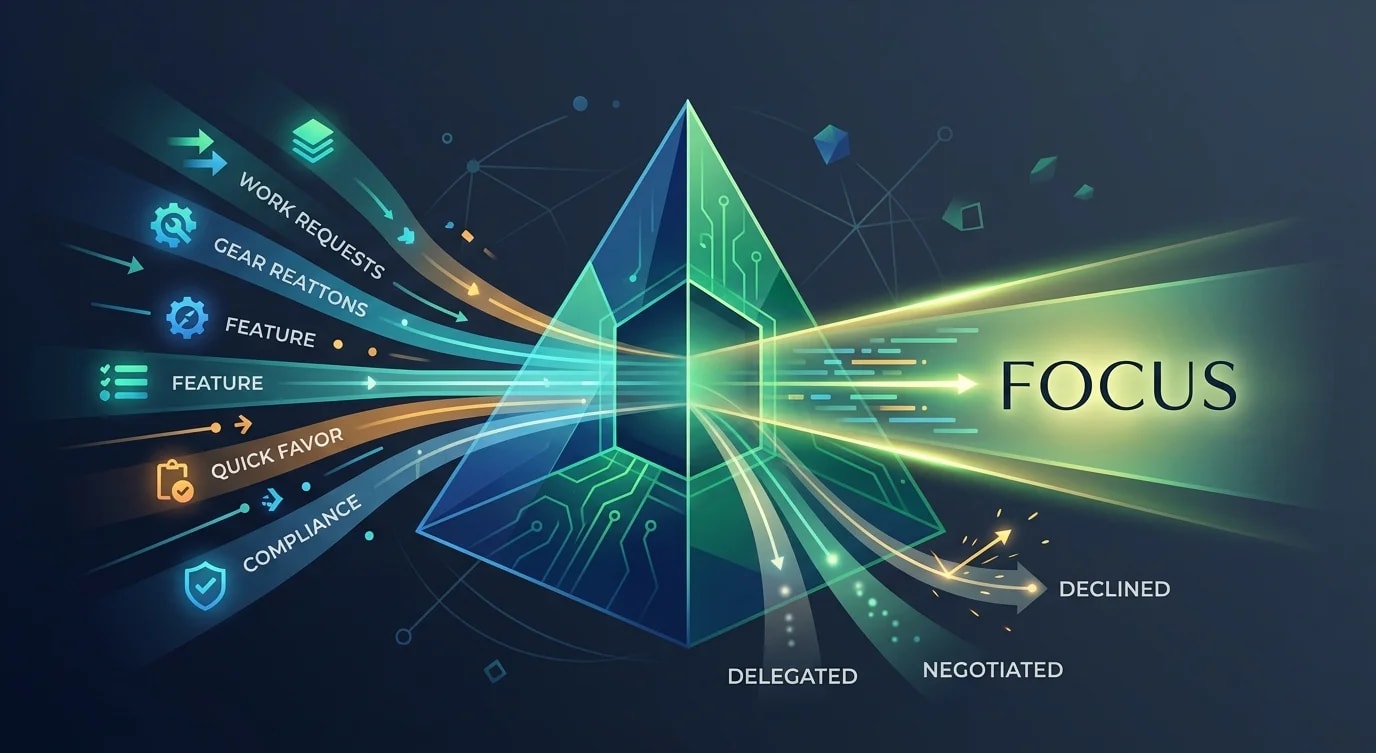
Remote Work Productivity Systems for Developers
Practical productivity systems for remote developers: async communication, protected focus time, home office ergonomics and workflows that avoid burnout.

Remote work removed the commute but introduced new failure modes. Context switching between Slack, email, and code. Meetings that could be documents. The boundary between work and not-work dissolving because your office is your living room. The developers who thrive remotely are not the ones with the most discipline — they are the ones with the best systems.
A system is a set of defaults that work without willpower. You do not decide to protect focus time every morning. You block your calendar once and the system defends it automatically. This guide covers the systems that remote developers use to do deep work consistently.
Structuring Your Day Around Deep Work
Programming requires sustained focus. Context switching between a Slack thread and a complex debugging session costs an average of 23 minutes to fully regain focus. Structure your day so the hardest work happens during your most focused hours, with communication batched into defined windows.
# Example: Developer Daily Schedule Template

## Morning Block (9:00 - 12:00) — Deep Work
- Slack notifications: OFF
- Status: 🔴 Focus Mode
- Calendar: Blocked as "Deep Work"
- Activity: Feature development, complex debugging, architecture

## Midday Block (12:00 - 13:30) — Communication
- Check and respond to Slack messages
- Review PRs (time-boxed to 30 min)
- Quick sync calls if needed
- Lunch

## Afternoon Block (13:30 - 16:00) — Collaborative Work
- Pair programming sessions
- Meetings (grouped together)
- Code reviews requiring discussion
- Documentation

## Late Afternoon (16:00 - 17:00) — Wrap Up
- Final Slack check
- Update tickets and leave status notes
- Plan tomorrow's deep work focus
- Commit and push work-in-progress branches// ❌ Reactive developer schedule
const reactiveDaySchedule = {
"9:00": "Open Slack, respond to 14 messages",
"9:25": "Start working on feature",
"9:32": "Slack notification — respond immediately",
"9:45": "Back to feature... where was I?",
"9:52": "Another Slack ping",
"10:00": "Standup meeting",
"10:20": "Try to remember what I was doing",
"10:35": "PR review request — switch context",
"11:00": "Back to feature, re-read code to rebuild context",
// 3 hours elapsed, 45 minutes of actual deep work
};
// ✅ Intentional developer schedule
const intentionalDaySchedule = {
"9:00": "5-minute Slack scan — urgent only, star rest for later",
"9:05": "Open yesterday's WIP, review plan notes",
"9:10": "Deep work begins — Slack off, status set",
"12:00": "Batch respond to Slack (30 min window)",
"12:30": "Standup meeting",
"13:00": "PR reviews and collaborative work",
"16:30": "Write tomorrow's plan, push WIP, final Slack check",
// 3 hours morning focus + 2.5 hours afternoon = 5.5 hours productive
};Async Communication That Actually Works
Remote teams that rely on real-time chat for everything create an environment where nobody can focus. The goal is making async the default and real-time the exception.
# Async Communication Guidelines

## When to use async (Slack message, document, ticket comment):
- Status updates
- Questions that can wait 2-4 hours
- Design proposals and technical decisions
- Code review feedback
- FYI announcements

## When to use real-time (call, huddle):
- Production incidents
- Blocked and cannot proceed without answer
- Complex misunderstandings after 3+ async messages
- Pair programming
- Sensitive conversations (performance, conflict)

## How to write a good async message:
1. Lead with context — don't make people ask follow-up questions
2. Include what you've already tried
3. Specify what you need and by when
4. Use threads, not channel messages// ❌ Bad async message — requires multiple round trips
const badMessage = `
Hey, the build is broken. Can you take a look?
`;
// Response: "Which build? What error? What repo?"
// 4 hours of back-and-forth before anyone can help
// ✅ Good async message — self-contained, actionable
const goodMessage = `
🔴 CI build failing on main — payment-service
**Error**: TypeScript compilation fails in \`src/payment/retry.ts:45\`
**Since**: commit abc123 (merged 2h ago by @alice)
**Impact**: No deploys possible until fixed
**What I've tried**: The type error is from a missing null check
on the response object. I have a fix ready:
PR #342 — https://github.com/org/repo/pull/342
**Need**: Review + merge on PR #342 so we can unblock deploys.
**Urgency**: Blocking release, but not customer-facing yet.
@bob @carol — either of you available to review?
`;Managing Context Across Projects
Remote developers often juggle multiple projects or codebases. Without a system for capturing context, you waste the first 30 minutes of every task switch rebuilding mental state.
interface WorkContext {
  project: string;
  currentTask: string;
  lastTouchedFiles: string[];
  openQuestions: string[];
  nextSteps: string[];
  blockers: string[];
  relevantLinks: string[];
}

// End-of-session context dump (takes 5 minutes, saves 30 minutes tomorrow)
const contextNote: WorkContext = {
  project: "payment-service",
  currentTask: "JIRA-1234: Add retry logic for provider timeouts",
  lastTouchedFiles: [
    "src/payment/retry.ts",
    "src/payment/__tests__/retry.test.ts",
    "src/payment/types.ts",
  ],
  openQuestions: [
    "Should we retry on 429 responses? Check with @alice",
    "Max retry count: 3 or 5? Need to benchmark latency impact",
  ],
  nextSteps: [
    "Implement exponential backoff (formula decided, not coded yet)",
    "Add circuit breaker check before retry attempts",
    "Write integration test with mock provider returning 503",
  ],
  blockers: [
    "Need staging payment sandbox credentials from infra team (asked in #infra)",
  ],
  relevantLinks: [
    "RFC: https://docs.google.com/doc/d/...",
    "Provider API docs: https://provider.com/docs/retry",
  ],
};

// Store in a consistent location
// Option A: Comment in your ticket/issue
// Option B: Markdown file in the repo (.dev-notes/context.md - gitignored)
// Option C: Personal notes app with project tags
Setting Boundaries That Prevent Burnout
When your office is your home, work can expand infinitely. Remote burnout comes from the absence of physical boundaries. You need to create artificial ones.
// Signals that you need better boundaries
const burnoutWarningSignals = [
  "Checking Slack after dinner 'just in case'",
  "Working weekends to 'catch up' (regularly, not occasionally)",
  "Feeling guilty when not working during business hours",
  "No hobbies or physical activity outside work",
  "Screen time exceeding 12 hours regularly",
  "Skipping lunch to stay in flow",
  "Responding to messages within 2 minutes at all hours",
];

// Systems that enforce boundaries
const boundarySystem = {
  physical: {
    dedicatedWorkspace: "A room or desk used only for work",
    shutdownRitual: "Close laptop lid, leave the room at end of day",
    noWorkDevicesInBedroom: "Phone goes to focus mode at 6pm",
  },
  digital: {
    slackSchedule: "Notifications active 9am-5pm only",
    calendarBlocking: "Block 12-1pm for lunch, non-negotiable",
    focusMode: "OS-level focus mode during deep work blocks",
    separateProfiles: "Different browser profiles for work and personal",
  },
  social: {
    communicatedHours: "Team knows my working hours and expects async",
    pto: "Take PTO in full days, not half-days checking Slack",
    weeklyRetrospective: "5 minutes Friday reviewing work-life balance",
  },
};# ❌ No separation between work and personal
# Same browser, same desktop, same everything
# Work leaks into personal time constantly
# ✅ Automated boundary enforcement
# macOS/Linux: Scheduled focus modes
# Block work apps after hours using built-in OS features
# Example: shutdown script (add to cron at 17:30)
#!/bin/bash
# End-of-day shutdown ritual
# Save all VS Code workspaces
# Push any WIP branches
git stash save "EOD auto-stash $(date +%Y-%m-%d)"
# Set Slack status
# (handled via Slack's scheduled status feature)
# macOS: Enable personal focus mode
# shortcuts run "Personal Focus"
echo "Work day complete. Step away from the desk."Optimizing Your Home Office Environment
Your physical environment affects your cognitive performance. Investing in your workspace is not a luxury — it is infrastructure.
const homeOfficeEssentials = {
  tier1_immediate: {
    description: "Biggest impact per dollar",
    items: [
      "External monitor (24\"+ at 1440p minimum)",
      "Mechanical keyboard (reduces fatigue over long sessions)",
      "Quality headphones with noise cancellation",
      "Stable internet connection (wired ethernet preferred)",
    ],
  },
  tier2_important: {
    description: "Significant quality of life improvement",
    items: [
      "Ergonomic chair with lumbar support",
      "Standing desk or desk converter",
      "External webcam with good microphone",
      "Desk lamp with warm light (reduces eye strain)",
    ],
  },
  tier3_optimization: {
    description: "Nice to have for serious remote workers",
    items: [
      "Ultrawide monitor or dual monitor setup",
      "UPS (uninterruptible power supply)",
      "Sound dampening panels",
      "Dedicated router for office with QoS for video calls",
    ],
  },
};
Key Takeaways
- Structure your day around deep work, not meetings — block 3+ hours of uninterrupted focus time every morning and defend it; batch communication into defined windows
- Make async communication the default — real-time chat for everything means nobody can focus; write self-contained messages that do not require back-and-forth
- Dump context at end of each session — spending 5 minutes writing down where you left off saves 30 minutes of context rebuilding the next day
- Enforce boundaries with systems, not willpower — scheduled Slack hours, physical workspace separation, and shutdown rituals prevent work from expanding into all hours
- Invest in your physical workspace — a good monitor, chair, and internet connection are not perks; they are the infrastructure that makes remote work sustainable