Multi-Region Database Failover: What Actually Breaks in Production
Multi-region failover looks simple on an architecture diagram — the reality involves replication lag, split-brain writes, and DNS caches that refuse to cooperate.
Categories
Systems & patterns · 39 articles

Multi-region failover looks simple on an architecture diagram — the reality involves replication lag, split-brain writes, and DNS caches that refuse to cooperate.

How to add fields, rename properties, and restructure events in async systems without coordinating deployments or silently breaking downstream consumers.

How the transactional outbox pattern eliminates the dual-write problem and guarantees reliable event publishing without coupling your database to your message broker.

Practical lessons from designing and operating microservices at scale — event-driven communication, service boundaries, and the patterns that survived production.

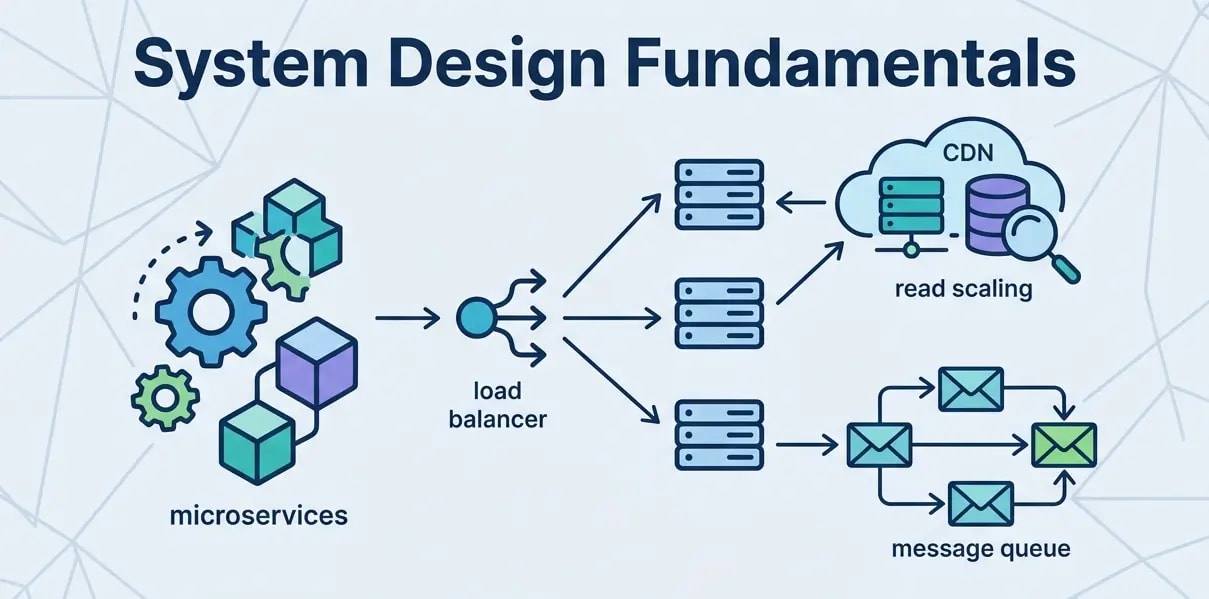
The core concepts behind scalable system design — load balancing, caching, database scaling, queues, and the tradeoffs that guide architectural decisions.
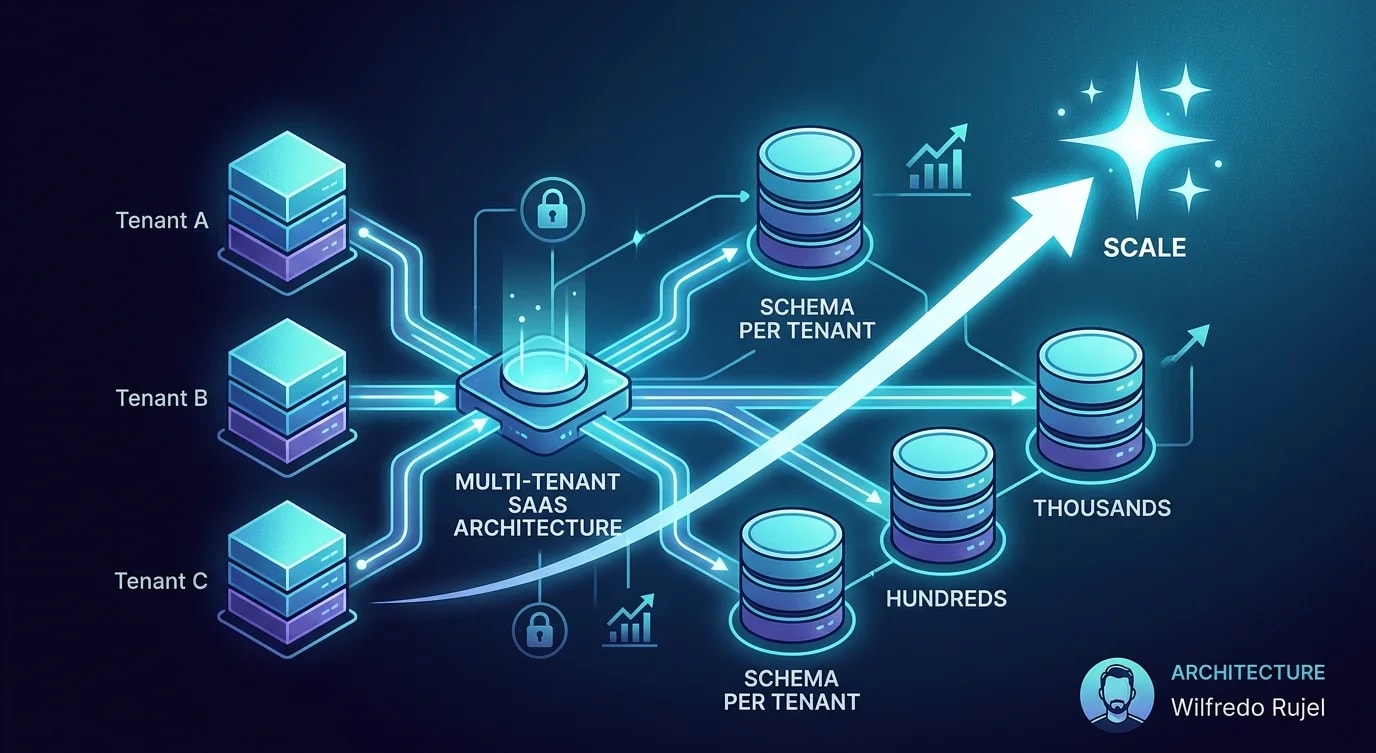
Architect multi-tenant SaaS applications using database isolation strategies, tenant-aware middleware, resource quotas, data partitioning patterns, and security boundaries that scale from ten tenants to ten thousand without redesigning the system.

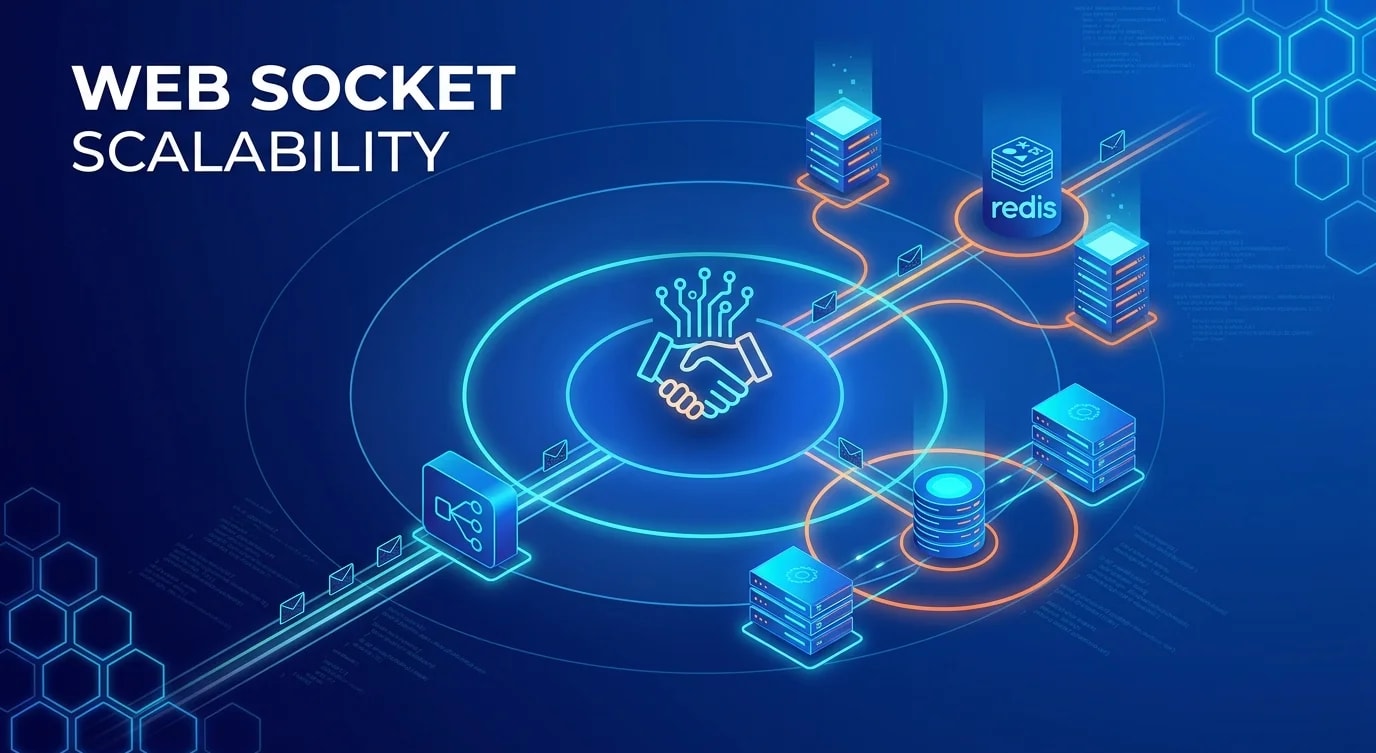
Design scalable WebSocket architectures using connection management, room-based pub/sub, heartbeat mechanisms, reconnection strategies, and horizontal scaling patterns that handle thousands of concurrent connections reliably.

Implement retry policies that recover from transient failures without overwhelming downstream services, using exponential backoff, jitter, circuit breakers, and retry budgets that keep your system stable under degraded conditions.

Implement event sourcing to maintain a complete, immutable audit trail of every state change in your application, with practical patterns for projection building, snapshotting, and replaying events for debugging and compliance.

A deep dive into multi-tenant architecture patterns for SaaS applications, covering tenant isolation strategies, database partitioning models, request routing, resource quotas, and the trade-offs between shared-everything and tenant-per-database approaches.

A balanced examination of event sourcing as an architectural pattern covering real-world use cases where it shines, common pitfalls that derail implementations, and practical patterns for event stores and projections.

A practical guide to implementing bounded contexts and context mapping in real applications, covering strategic DDD patterns that prevent domain model corruption and enable autonomous team ownership.

A practical guide to incrementally replacing legacy monolithic systems using the strangler fig pattern, with routing strategies, data synchronization techniques, and rollback safety nets.

Apply Domain-Driven Design bounded contexts to real codebases by defining clear boundaries between subdomains, managing context mapping between teams, and avoiding the common pitfall of sharing domain models across services.

Implement event sourcing in audit-heavy applications where every state change must be traceable, using append-only event stores, projections, and snapshot strategies that balance compliance requirements with query performance.

Apply the strangler fig pattern to incrementally replace legacy systems with modern architectures using practical examples of route-based migration, feature flags, data synchronization, and rollback strategies that keep production running throughout.

Implement hexagonal architecture with concrete TypeScript examples showing how ports define business contracts, adapters handle infrastructure, and dependency inversion keeps the domain layer testable and framework-independent.

Practical strategies for identifying, implementing, and integrating bounded contexts in domain-driven design, with concrete patterns for context mapping, anti-corruption layers, and shared kernels across service boundaries.

Design event mesh architectures that route events across multiple clouds and regions with dynamic topic routing, protocol bridging, schema governance, and eventually consistent delivery guarantees.

Implement clean architecture patterns that separate business logic from infrastructure concerns, making applications testable, maintainable, and adaptable to changing requirements or technology choices.

Design cell-based architectures that isolate failures to small blast radii, enable independent scaling, and prevent cascading outages across distributed systems.

Explore edge computing patterns that bring computation closer to users, reduce latency, and enable new capabilities for modern web applications and APIs.

Learn how to apply the strangler fig pattern to incrementally migrate legacy systems to modern architectures without risky big-bang rewrites or extended downtime.

How to implement the saga pattern to manage distributed transactions across microservices — comparing orchestration versus choreography approaches with practical TypeScript examples and compensation logic.

How to implement hexagonal architecture (ports and adapters) in a real application — separating business logic from infrastructure with clear boundaries, dependency inversion, and testable core domains.

How to design a plugin system that lets users extend your application without modifying its core — covering plugin interfaces, lifecycle hooks, dependency resolution, and sandboxing.

A practical guide to consensus algorithms — covering Raft, Paxos, and leader election patterns with real-world examples of when and why distributed systems need them.

A practical guide to event sourcing — when to use it, how to implement event stores, build projections, handle schema evolution, and avoid common pitfalls.

How API gateways handle routing, authentication, rate limiting, and response aggregation — with patterns for building or choosing the right gateway for your architecture.

A comparison of threading, async/await, and actor-based concurrency models — when each fits, their tradeoffs, and how to avoid common pitfalls.

How to implement timeouts, retries, and backoff strategies that prevent cascading failures in distributed architectures.

A service mesh moves networking concerns like retries, circuit breaking, mTLS, and observability out of application code and into the infrastructure layer.

When a downstream service is failing, continuing to send requests makes everything worse — the circuit breaker pattern stops the cascade by failing fast.

Command Query Responsibility Segregation uses different models for reading and writing data — here's when it solves real problems and when it's unnecessary complexity.

Entities, value objects, aggregates, and bounded contexts — the DDD patterns that keep complex business logic organized without over-engineering simple systems.

Event-driven systems decouple producers from consumers through asynchronous message passing — but eventual consistency, ordering guarantees, and idempotency introduce real complexity.

RabbitMQ, Redis Streams, or Kafka — understanding the messaging patterns behind decoupled, resilient systems and when each tool fits.

Not everything belongs in the request-response cycle — queues, workers, retries, and dead letter patterns for reliable background processing.

GraphQL isn't a REST replacement — it's an alternative with different trade-offs that matter depending on your client complexity, team size, and data shape.