
Architecture
DDD in Practice: Bounded Contexts and Context Mapping
A practical guide to bounded contexts and context mapping in real applications: the strategic DDD patterns that stop domain models from rotting.
·5 min read
Categories
Systems & patterns · 40 articles · Page 2 of 4
A practical guide to bounded contexts and context mapping in real applications: the strategic DDD patterns that stop domain models from rotting.

A practical guide to replacing legacy monoliths incrementally with the strangler fig pattern: routing strategies, data synchronization and rollback nets.

Apply DDD bounded contexts to real codebases: clear subdomain boundaries, context mapping between teams, and never sharing domain models across services.

Event sourcing for audit-heavy applications where every state change must be traceable: append-only stores, projections and snapshot strategies.

Replace legacy systems incrementally with route-based migration, feature flags, data synchronization and rollback strategies that keep production up.

Hexagonal architecture in TypeScript: ports define business contracts, adapters handle infrastructure, and dependency inversion keeps the domain testable.

Practical strategies for identifying, implementing and integrating bounded contexts: context mapping, anti-corruption layers and shared kernels.

Design event mesh architectures that route events across clouds and regions with dynamic topic routing, protocol bridging and schema governance.

Apply clean architecture patterns that separate business logic from infrastructure, keeping applications testable, maintainable and open to change.

Design cell-based architectures that isolate failures to small blast radii, allow independent scaling and stop cascading outages across distributed systems.
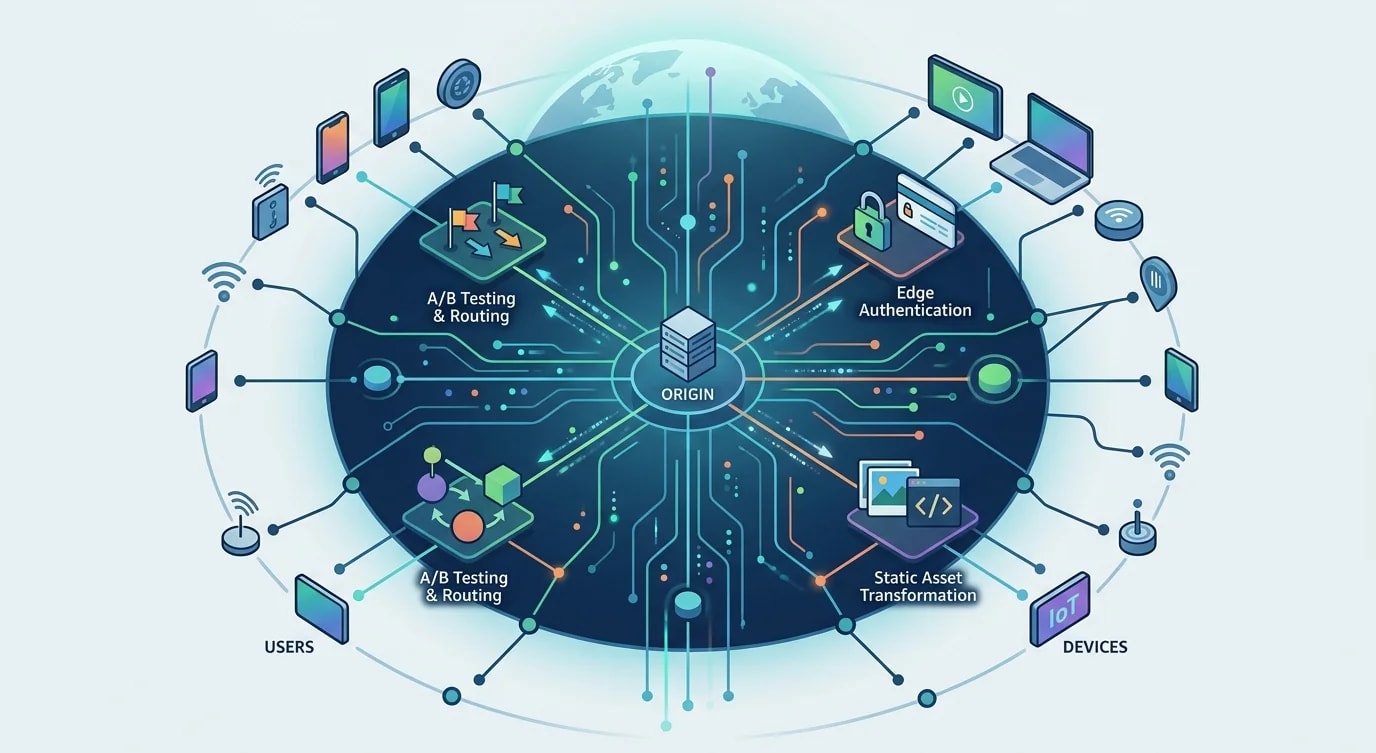
Explore edge computing patterns that bring computation closer to users, reduce latency, and enable new capabilities for modern web applications and APIs.

How to apply the strangler fig pattern to migrate legacy systems to modern architectures without risky big-bang rewrites or extended downtime.