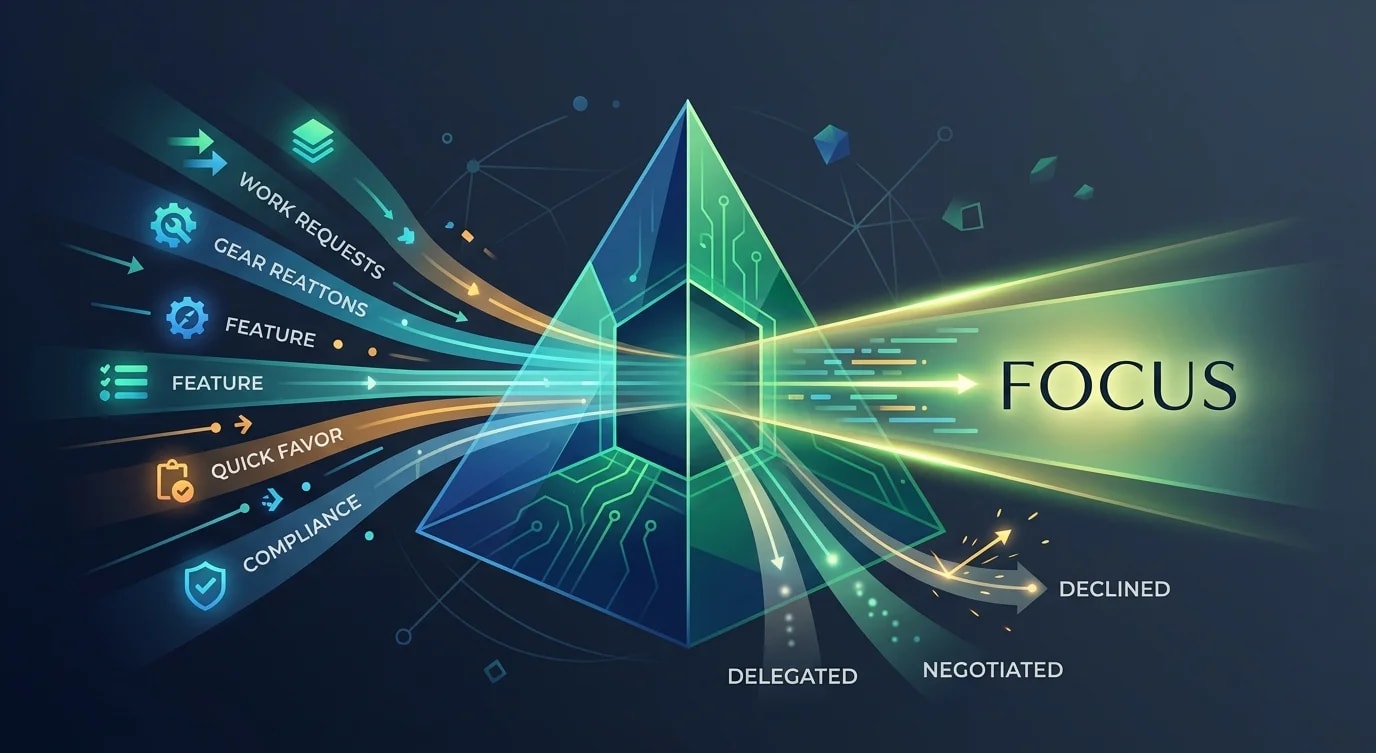
Navigating Organizational Politics as a Staff Engineer
How staff engineers influence technical decisions across teams, build alignment without authority, manage conflicting priorities and drive real change.

The jump from senior to staff engineer isn't about writing better code. It's about making entire organizations write better code. That requires navigating a landscape where technical correctness alone doesn't win—you need alignment, sponsorship, and strategic patience.
Calling this "politics" makes it sound dirty. It's not. It's the skill of making good things happen in systems made of people. Every staff engineer who's driven a successful migration, standardized a practice, or killed a bad architecture has done it through organizational dynamics, not just pull requests.
Understanding Decision-Making Structures
Before you can influence decisions, you need to understand how they actually get made. The org chart shows reporting lines. The real decision-making graph looks different.
// ❌ Assuming decisions follow the org chart
interface OrgChartAssumption {
  // "I'll propose this at the architecture review,
  //  the CTO will approve it, teams will adopt it"
  proposal: TechnicalDecision;
  approval: "architecture-review";
  adoption: "mandated-by-leadership";
}
// This almost never works for cross-cutting changes// ✅ Mapping actual decision influence
interface DecisionInfluenceMap {
formalAuthority: string[]; // People who can say "yes"
informalInfluence: string[]; // People whose opinion
// shapes the "yes"
implementers: string[]; // People who must execute
blockers: string[]; // People who can say "no"
// or slow-walk
champions: string[]; // People who will advocate
// when you're not in the room
}
function mapStakeholders(
proposal: string
): DecisionInfluenceMap {
// For a database migration proposal:
return {
formalAuthority: ["VP Engineering", "CTO"],
informalInfluence: [
"Staff engineer on Platform team",
"DBA who's been here 8 years",
"SRE lead who handles incidents",
],
implementers: [
"Backend team leads",
"Individual contributors on each team",
],
blockers: [
"Product managers with frozen roadmaps",
"Team that just finished a painful migration",
],
champions: [
"Senior engineer who hit scaling limits last quarter",
"New hire from company that already did this",
],
};
}The informal influencers matter most. If the staff engineer on the platform team thinks your migration plan is half-baked, it doesn't matter that the CTO nodded in a meeting. Map these relationships before you start socializing any significant technical change.
Pre-Alignment and Proposal Socialization
The biggest mistake staff engineers make is treating technical proposals like code reviews—submit it, get feedback, iterate. Significant changes need pre-alignment: individual conversations with key stakeholders before any formal presentation.
// The socialization process for a technical proposal
interface ProposalPhase {
  name: string;
  activities: string[];
  duration: string;
}

const proposalPlaybook: ProposalPhase[] = [
  {
    name: "Research & Draft",
    activities: [
      "Write the proposal document",
      "Include cost-benefit analysis with real numbers",
      "Identify 3 alternative approaches you considered",
      "Make the risks section the strongest part",
    ],
    duration: "1-2 weeks",
  },
  {
    name: "One-on-One Socialization",
    activities: [
      "Share draft with 2-3 trusted peers first",
      "Incorporate their feedback before going wider",
      "Meet individually with each team lead affected",
      "Ask: 'What would make this work for your team?'",
      "Identify and address concerns privately",
    ],
    duration: "1-2 weeks",
  },
  {
    name: "Broader Review",
    activities: [
      "Present at architecture review with pre-aligned leads",
      "No surprises — every concern was already discussed",
      "Frame as 'we've been discussing this' not 'I propose'",
      "Offer concrete first step, not a big bang",
    ],
    duration: "1 week",
  },
  {
    name: "Incremental Adoption",
    activities: [
      "Start with one willing team as pilot",
      "Document what you learn and share updates",
      "Adjust the approach based on real-world feedback",
      "Let success attract the next adopter",
    ],
    duration: "Ongoing",
  },
];
The one-on-one conversations are where the real work happens. You're not asking for permission—you're incorporating context you don't have. Every team lead knows constraints about their team that you don't. Integrating those constraints into your proposal before the formal review transforms potential blockers into co-authors.
Managing Conflicting Technical Priorities
Staff engineers frequently mediate between teams that want incompatible things. Team A wants to standardize on GraphQL. Team B needs REST for their IoT devices. Team C already invested six months in gRPC. You need a decision that moves the organization forward without creating enemies.
// Framework for navigating technical conflicts
interface TechnicalConflict {
  positions: Map<string, string>;    // What teams say they want
  interests: Map<string, string[]>;  // Why they want it
  constraints: Map<string, string[]>;// What they can't compromise on
}

function analyzeAPIConflict(): TechnicalConflict {
  return {
    positions: new Map([
      ["Team A", "We should standardize on GraphQL"],
      ["Team B", "We need REST endpoints"],
      ["Team C", "We already use gRPC everywhere"],
    ]),
    interests: new Map([
      [
        "Team A",
        [
          "Reduce over-fetching in mobile app",
          "Flexible queries for varied clients",
        ],
      ],
      [
        "Team B",
        [
          "Simple protocol for constrained devices",
          "Broad tooling support",
          "Low implementation overhead",
        ],
      ],
      [
        "Team C",
        [
          "Type safety across service boundaries",
          "Performance for internal communication",
          "Investment protection",
        ],
      ],
    ]),
    constraints: new Map([
      ["Team A", ["Cannot accept N+1 query patterns"]],
      ["Team B", ["Devices can't run GraphQL clients"]],
      ["Team C", ["Six months of work can't be thrown away"]],
    ]),
  };
}

// Resolution: focus on interests, not positions
// Internal services: gRPC (protects Team C's investment,
//   gives Team A type safety)
// External APIs: REST (works for Team B's devices)
// Client-facing BFF: GraphQL gateway over gRPC services
//   (gives Team A flexible queries)
The pattern is borrowed from negotiation theory: separate positions from interests. "We want GraphQL" is a position. "We need to reduce over-fetching for mobile" is an interest. Interests can be satisfied in multiple ways. Positions are binary. Always redirect conversations from positions to interests.
Writing Effective Technical Strategy Documents
RFC-style documents are the staff engineer's primary tool for driving change at scale. The quality of the document determines whether people read it, and whether they trust the analysis.
## Structure of an effective technical strategy doc

### 1. Context & Problem Statement (1 page max)
- What is happening today?
- Why is it a problem? (Use metrics, not opinions)
- Who is affected and how?

### 2. Goals & Non-Goals
- Goals: Specific, measurable outcomes
- Non-Goals: Things this proposal explicitly does NOT address
  (prevents scope creep in discussion)

### 3. Options Considered (most important section)
- Option A: Description, pros, cons, estimated effort
- Option B: Description, pros, cons, estimated effort
- Option C: Description, pros, cons, estimated effort
- Each option should be genuinely viable — strawmen
  undermine your credibility

### 4. Recommendation
- Which option and why
- What trade-offs you're accepting
- What would change this recommendation

### 5. Migration Plan
- Phase 1: Pilot with willing team (2-4 weeks)
- Phase 2: Expand to low-risk services (4-8 weeks)
- Phase 3: Full adoption with support (ongoing)
- Rollback plan at each phase

### 6. Open Questions
- What you don't know yet
- What feedback you specifically need
The Options Considered section is where trust is built or lost. If your "alternative" options are clearly terrible and your recommendation is obviously right, readers know you're performing objectivity. Present three genuinely viable options, honestly assess each, and explain why you lean toward one. People respect the analysis even when they disagree with the conclusion.
Building Durable Influence
Influence at the staff level compounds over time. Every well-run migration, every accurate technical assessment, every time you correctly predicted a problem builds a reputation that makes future proposals easier.
// ❌ One-shot influence attempts
function pushForChange(proposal: string): void {
  writeProposal(proposal);
  presentAtArchReview(proposal);
  wonderWhyNothingChanged();
}// ✅ Compounding influence through consistent delivery
interface InfluenceActions {
shortTerm: string[];
mediumTerm: string[];
longTerm: string[];
}
const influencePlaybook: InfluenceActions = {
shortTerm: [
"Help other teams when they're stuck",
"Give thorough, constructive code reviews outside your team",
"Write clear post-mortems that focus on systems, not blame",
"Share context in Slack that helps people do their jobs",
],
mediumTerm: [
"Drive one cross-team project to completion",
"Mentor an engineer who later drives their own initiatives",
"Build a tool or library that other teams voluntarily adopt",
"Write documentation that becomes the reference",
],
longTerm: [
"Develop a reputation for honest technical assessment",
"Become the person leaders consult before making tech decisions",
"Build a network of trusted peers across engineering",
"Shape the engineering culture through consistent example",
],
};Key Takeaways
Technical correctness is necessary but insufficient for driving organizational change—staff engineers must understand the informal decision-making structure, not just the org chart. Pre-alignment through one-on-one conversations with key stakeholders transforms potential blockers into co-authors, making formal reviews smoother and decisions faster. When mediating conflicting technical preferences, separate positions from interests: teams don't actually need a specific technology, they need specific capabilities that multiple approaches could satisfy. Technical strategy documents earn trust through honest analysis—present genuinely viable alternatives, acknowledge real trade-offs, and include what you don't know. Influence compounds through consistent actions: helping other teams, writing clear post-mortems, sharing context generously, and delivering on commitments. The difference between a senior engineer who's frustrated that nobody listens and a staff engineer who drives change is rarely technical—it's the skill of making good decisions happen through systems made of people.