From Junior to Senior: Lessons That Changed How I Write Code
The mindset shifts, technical habits, and career decisions that shaped my growth from a junior developer to a senior engineer over seven years in the industry.
Categories
Level up your career · 30 articles

The mindset shifts, technical habits, and career decisions that shaped my growth from a junior developer to a senior engineer over seven years in the industry.

Distill five years of software engineering into the lessons that matter most — from mastering fundamentals over chasing frameworks, to building trust through reliable delivery, writing code for the next developer, and knowing when simplicity beats cleverness.

Design internal developer platforms that accelerate delivery using self-service infrastructure, golden paths, platform APIs, developer experience metrics, and adoption strategies that earn trust instead of mandating compliance.

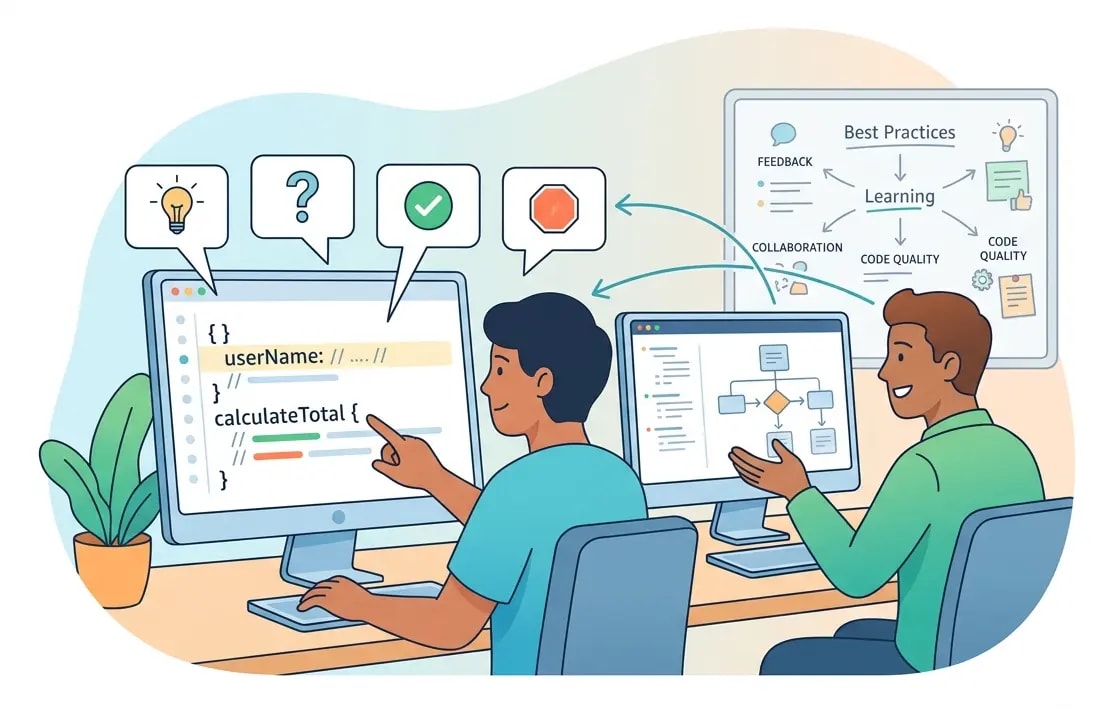
The principles and practices that transform code review from a gatekeeping ritual into a genuine learning tool — for both the reviewer and the author.

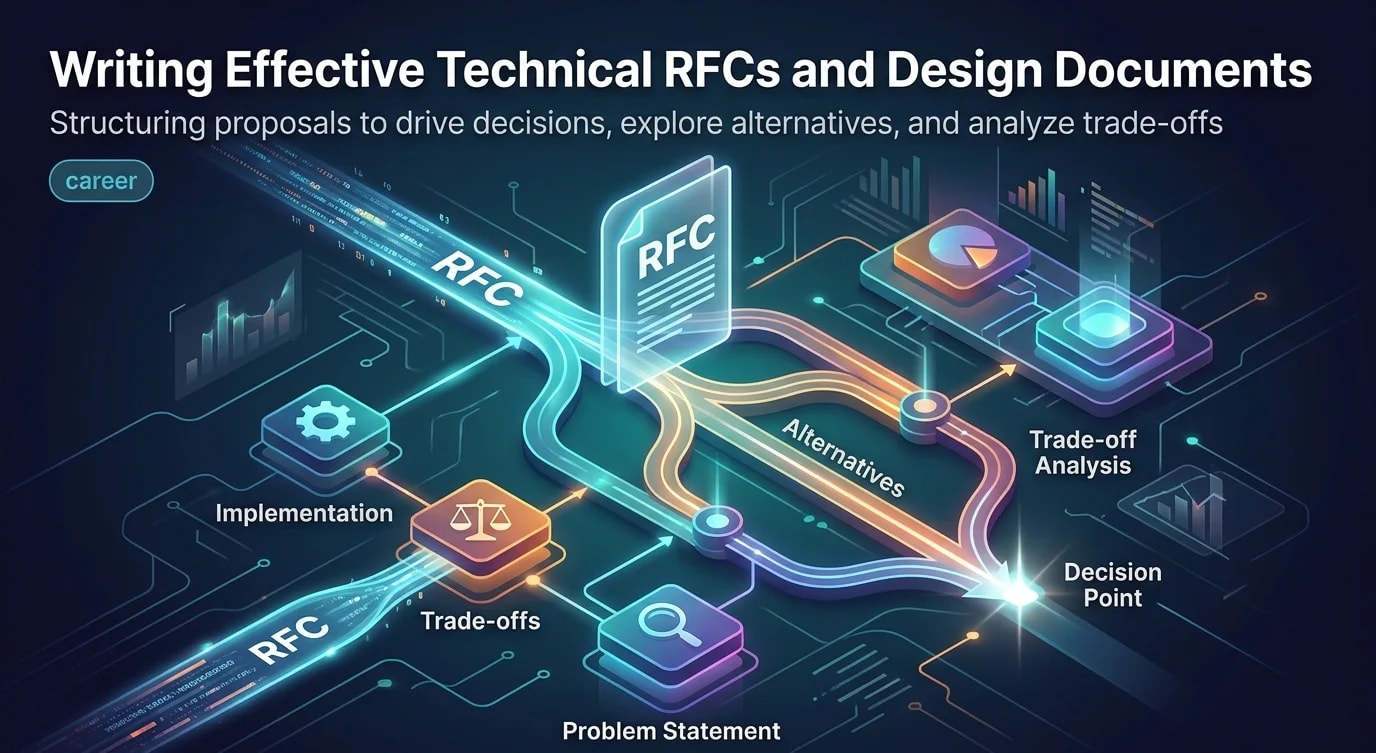
Structure technical RFCs that clearly communicate the problem, evaluate alternatives, propose a solution, and drive team alignment on architecture decisions, with templates and examples for common engineering decisions.

Battle-tested code review practices that go beyond catching bugs, focusing on feedback calibration, review sizing strategies, and creating a review culture that accelerates both code quality and team development.

A guide to building influence and driving technical decisions as a senior engineer without formal management authority, covering consensus building, technical writing, and stakeholder management.

A framework for using open source contributions as a career accelerator, covering project selection, contribution strategy, and turning community involvement into professional opportunities.

A candid guide on what changes in technical interviews at the senior level, covering system design preparation, behavioral storytelling, and the shift from proving competence to demonstrating judgment.

Write technical RFCs and design documents that actually drive decisions by structuring proposals around trade-offs, alternatives considered, and measurable success criteria rather than exhaustive implementation details that nobody reads.

Develop an authentic personal brand as a software engineer through technical writing, open-source contributions, conference talks, and strategic networking that creates career opportunities without feeling performative.

Navigate the shift from individual contributor to engineering manager with practical frameworks for delegation, one-on-ones, performance management, and the identity change that comes with measuring success through other people's output.

Practical frameworks for senior engineers and tech leads to evaluate, negotiate, and decline work requests effectively, protecting team focus while maintaining relationships and organizational trust.

Practical strategies for staff engineers to influence technical decisions across teams, build alignment without authority, manage conflicting priorities, and drive change through organizational dynamics rather than code alone.

Design engineering career ladders with clear expectations, measurable competencies, and dual-track progression that retains both individual contributors and aspiring managers without forcing a single path.

Understand what staff engineering actually entails, how technical leadership differs from management, and the strategies that help senior engineers grow into organizational-impact roles.

Design a technical hiring process that evaluates real engineering ability, reduces bias, respects candidates' time, and consistently identifies strong contributors.

Learn the structure, storytelling, and optimization techniques that make technical blog posts stand out, attract readers, and establish you as a credible voice in the engineering community.

How to run one-on-one meetings that build trust and accelerate growth — covering question frameworks, career development conversations, difficult feedback delivery, and tracking action items across sessions.

How to build genuine professional relationships as a software engineer — through open source contributions, technical writing, conference participation, and community engagement without the cringe of transactional networking.

Practical productivity systems for remote developers — covering async communication, focus time protection, home office ergonomics, and workflows that prevent burnout while maintaining high output.

A practical framework for delivering constructive feedback, receiving criticism without defensiveness, and building a team culture where honest feedback is normal — with specific techniques for code reviews, 1-on-1s, and retrospectives.

A practical guide to navigating the shift from IC to tech lead — covering delegation, technical decision-making, one-on-ones, and redefining what productivity means when your output is measured through your team.

How to transform daily standups from painful status recitals into focused synchronization sessions — covering async alternatives, time-boxing techniques, and formats that surface blockers early.

A senior engineer's guide to mentoring that actually works — structuring 1:1s, giving feedback that sticks, calibrating challenge levels, and building independence rather than dependency.

A framework for negotiating software engineering compensation — covering research, timing, competing offers, equity evaluation, and the specific phrases that move conversations forward.

How to build a developer portfolio that stands out — covering project selection, storytelling, technical depth, and the common mistakes that get portfolios ignored by hiring managers.

Practical advice for preparing and succeeding in senior engineering interviews — covering system design, behavioral questions, architecture discussions, and negotiation.

Practical pair programming techniques that boost code quality and knowledge sharing — covering driver-navigator, ping-pong, and remote pairing workflows.

How to think about career progression as a software engineer, from setting intentional goals to building leverage beyond writing code.