
Architecture
Evolving Event Schemas Without Breaking Consumers
How to add fields, rename properties, and restructure events in async systems without coordinating deployments or silently breaking downstream consumers.
·4 min read
Tags
8 articles
How to add fields, rename properties, and restructure events in async systems without coordinating deployments or silently breaking downstream consumers.

How the transactional outbox pattern eliminates the dual-write problem and guarantees reliable event publishing without coupling database to broker.

Practical lessons from designing and operating microservices at scale: event-driven communication, service boundaries and the patterns that survived.

Build real-time data pipelines with Apache Kafka and TypeScript: partitioning strategies, consumer groups, exactly-once semantics and dead letter queues.
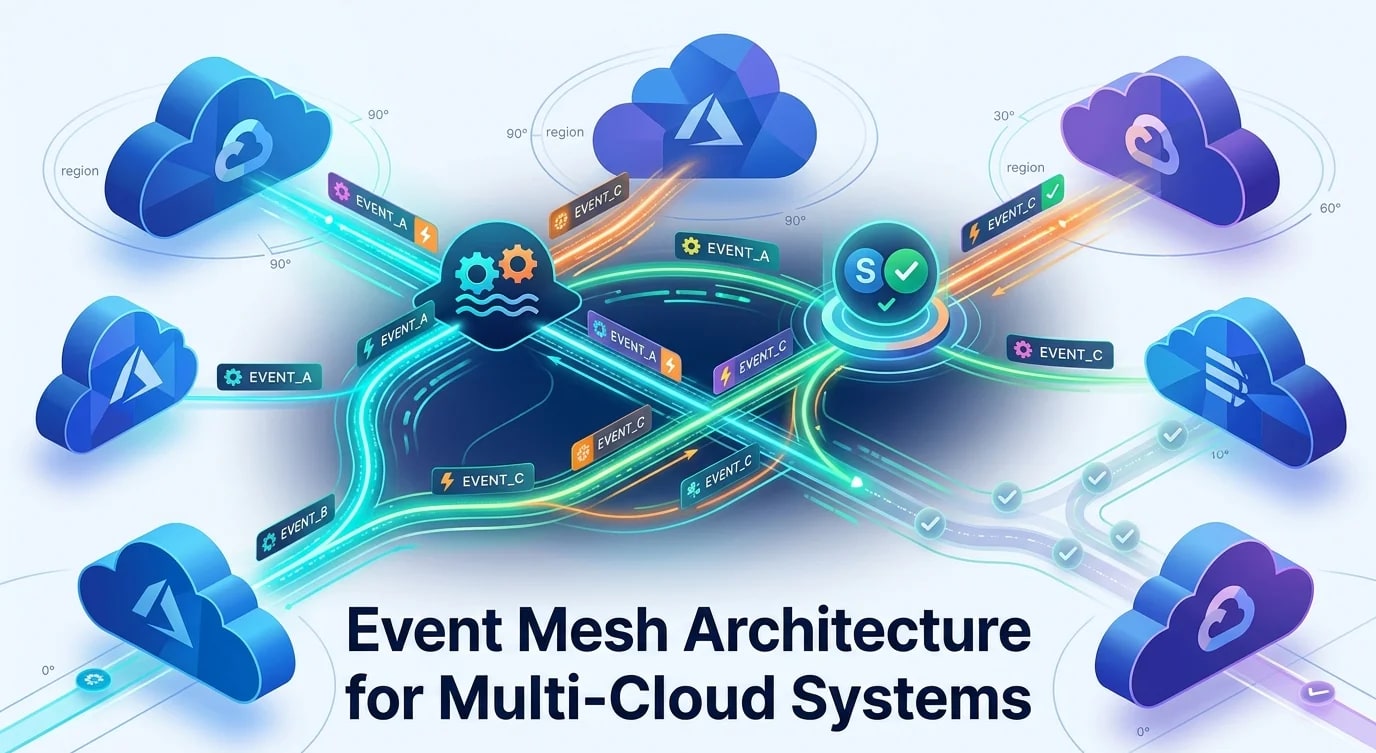
Design event mesh architectures that route events across clouds and regions with dynamic topic routing, protocol bridging and schema governance.

Build CDC pipelines that stream database changes downstream in real time: log-based capture with Debezium, event formats, schema evolution, exactly-once.

A step-by-step tutorial for an event-driven microservice with Node.js, RabbitMQ and TypeScript: publishing, consumption, DLQs and idempotent processing.

Event-driven systems decouple producers from consumers through async messaging — but eventual consistency, ordering and idempotency add real complexity.