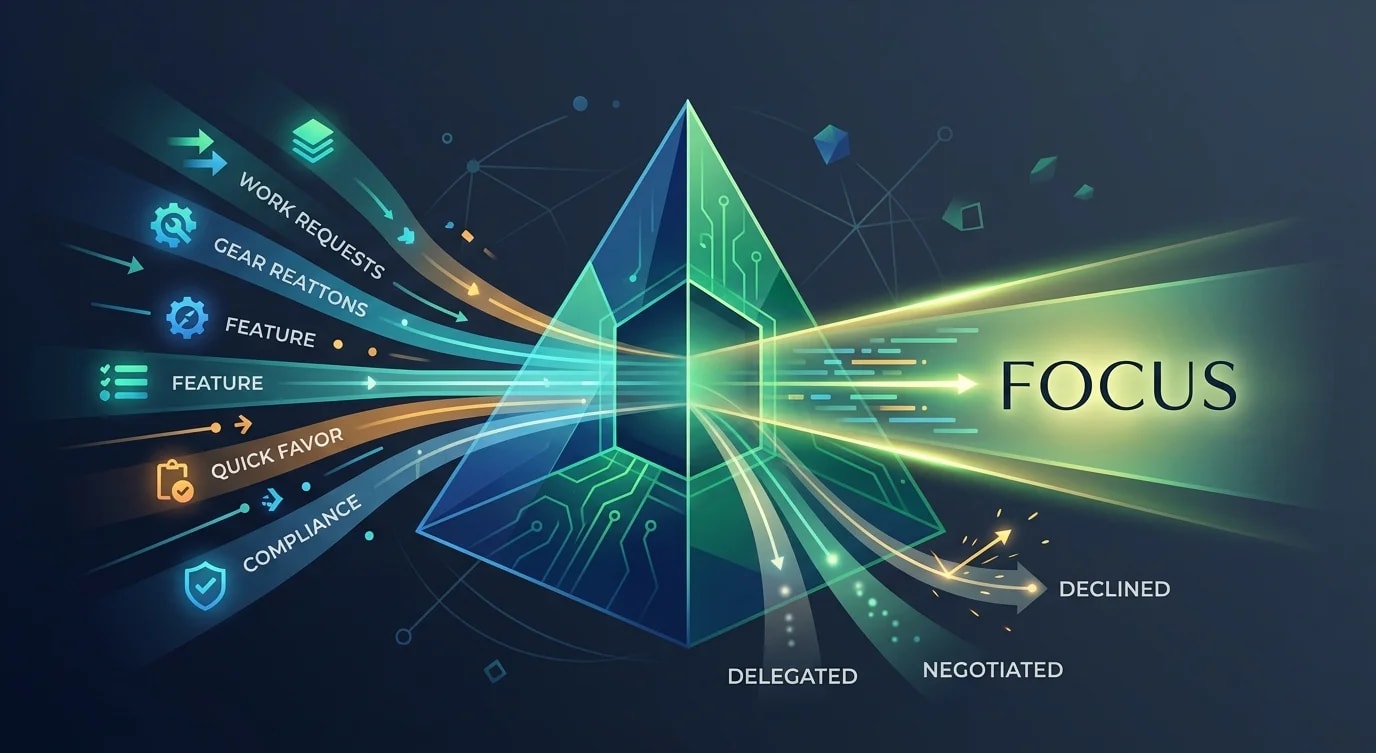
Transición de colaborador individual a líder técnico
Guía práctica para pasar de IC a líder técnico: delegación, decisiones técnicas, reuniones individuales y redefinir la productividad vía el equipo.
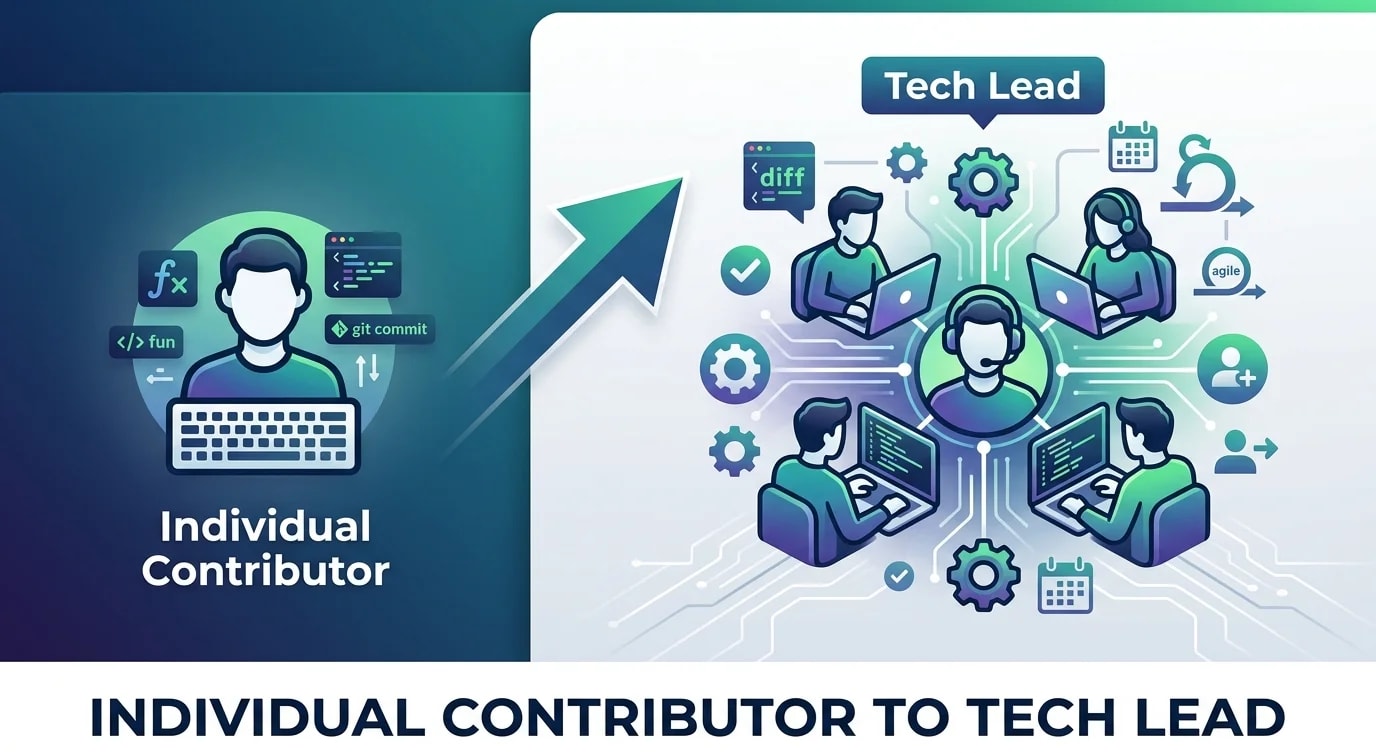
La transición de colaborador individual (IC) a líder técnico no es un ascenso en el sentido tradicional. Es un cambio de rol. Las habilidades que te convirtieron en un IC excelente —concentración profunda, código rápido, resolver problemas por tu cuenta— pueden jugarte en contra como líder técnico si no las adaptas. Tu trabajo ya no es escribir el mejor código. Tu trabajo es asegurarte de que tu equipo entregue el mejor software.
Esta es la parte más difícil de la transición: redefinir cómo se ve un día productivo. Para un IC, un día productivo significa PRs fusionados y problemas resueltos. Para un líder técnico, un día productivo puede significar cero líneas de código, pero tres compañeros desbloqueados, una decisión de arquitectura tomada y una conversación difícil resuelta.
Los primeros 90 días
Los primeros tres meses marcan el patrón. La mayoría de los nuevos líderes técnicos cometen uno de dos errores: siguen programando al mismo ritmo de siempre (descuidando sus responsabilidades de liderazgo) o dejan de programar por completo (perdiendo credibilidad técnica). El objetivo es un equilibrio deliberado.
// ❌ Week 1 as tech lead — still operating as an IC
const myWeek = {
  monday: 'Deep coding on feature X (8 hours)',
  tuesday: 'Deep coding on feature X (8 hours)',
  wednesday: 'Code review (1 hour), coding (7 hours)',
  thursday: 'Standup (15 min), coding (7.75 hours)',
  friday: 'Coding (6 hours), team retro I forgot about (1 hour)',
  // Team members are blocked, waiting for decisions
  // No one knows the technical direction
};

// ✅ Week 1 as tech lead — intentional time allocation
const myWeek = {
  monday: '1:1s with 3 reports (3 hours), architecture review (2h), coding (3h)',
  tuesday: 'Sprint planning (1.5h), unblock Maria on API design (1h), coding (5h)',
  wednesday: 'Code reviews (2h), coding on critical path (4h), doc writing (2h)',
  thursday: 'Cross-team sync (1h), mentor session (1h), coding (4h), hiring (2h)',
  friday: 'Retro (1h), tech debt review (1h), coding (3h), week planning (1h)',
  // Team is unblocked, direction is clear, lead still writes code
};
Delegar no es abdicar
La habilidad más difícil de desarrollar es la delegación. Como IC, sabías que podías implementar algo más rápido de lo que tardarías en explicárselo a otra persona. Como líder técnico, hacerlo tú mismo es un modo de fallo. Cada tarea que no delegas es una oportunidad de crecimiento perdida para tu equipo.
interface DelegationDecision {
  task: string;
  shouldDelegate: boolean;
  reason: string;
  delegateTo?: string;
  supportNeeded?: string;
}

function evaluateDelegation(task: Task): DelegationDecision {
  // Tasks only YOU should do as tech lead
  if (task.requiresOrgContext || task.isArchitecturalDecision) {
    return {
      task: task.name,
      shouldDelegate: false,
      reason: 'Requires organizational context or architectural authority',
    };
  }

  // Tasks you MUST delegate even if you could do them faster
  if (task.isGrowthOpportunity && task.matchesTeamMemberGoal) {
    return {
      task: task.name,
      shouldDelegate: true,
      reason: 'Growth opportunity aligned with team member career goals',
      delegateTo: task.bestFitTeamMember,
      supportNeeded: 'Pair on design, review implementation',
    };
  }

  // Tasks that are better done by someone with more context
  if (task.domainExpert !== 'you') {
    return {
      task: task.name,
      shouldDelegate: true,
      reason: 'Team member has deeper domain expertise',
      delegateTo: task.domainExpert,
      supportNeeded: 'Available for questions, review PR',
    };
  }

  return {
    task: task.name,
    shouldDelegate: true,
    reason: 'Default: delegate unless there is a reason not to',
    delegateTo: task.bestFitTeamMember,
    supportNeeded: 'Define success criteria, set check-in points',
  };
}# ❌ Delegation anti-patterns
- "I'll just do it myself, it's faster" → Team never grows
- "Here's exactly how to implement it" → Micromanagement
- "Figure it out" with no context → Abdication, not delegation
# ✅ Effective delegation
- "Here's the problem and constraints. How would you approach it?"
- "I'd suggest starting with X, but I'm open to other approaches."
- "Let's check in Wednesday. If you're stuck before then, grab me."Toma de decisiones técnicas
Como líder técnico, eres quien toma la decisión final sobre las opciones técnicas dentro del ámbito de tu equipo. Esto no significa que decidas en solitario. Significa que te aseguras de que las decisiones se tomen, con las personas adecuadas consultadas, en un plazo razonable.
type DecisionApproach =
  | 'directive'     // You decide, inform the team
  | 'consultative'  // Gather input, you decide
  | 'consensus'     // Team decides together
  | 'delegated';    // Someone else decides

function chooseApproach(decision: TechnicalDecision): DecisionApproach {
  // Urgent + low impact → just decide
  if (decision.urgency === 'high' && decision.impact === 'low') {
    return 'directive';
  }

  // High impact + team expertise varies → consult then decide
  if (decision.impact === 'high' && decision.teamExpertiseVaries) {
    return 'consultative';
  }

  // Affects everyone equally + team is experienced → consensus
  if (decision.affectsEntireTeam && decision.teamSeniority === 'high') {
    return 'consensus';
  }

  // Clear domain owner exists → let them decide
  if (decision.domainOwner) {
    return 'delegated';
  }

  return 'consultative'; // Default: gather input, then decide
}

// The key insight: a "good enough" decision made today
// beats a "perfect" decision made next month.
// Your job is to prevent analysis paralysis.
Cómo llevar reuniones individuales efectivas
Las reuniones individuales son tu reunión recurrente más importante. No son actualizaciones de estado —para eso están los standups—. Las reuniones individuales giran en torno a la persona: su crecimiento, sus bloqueos, sus inquietudes y su trayectoria profesional.
## One-on-One Template

### Opening (5 min)
- How are things going? (Open-ended, let them lead)
- Anything on your mind this week?

### Their Topics (15 min)
- What's blocking you right now?
- Any frustrations with process, tools, or collaboration?
- What do you need from me that you're not getting?

### Growth & Development (5 min)
- How is [current project] stretching your skills?
- Any areas where you want more exposure or responsibility?
- Progress on [previously discussed goal]?

### My Topics (5 min)
- Feedback on [specific recent work]
- Heads up on [upcoming changes that affect them]
- [Specific ask or context they need]// ❌ Bad one-on-one patterns
const badOneOnOne = {
frequency: 'canceled whenever something comes up',
format: 'status update — "what are you working on?"',
focus: 'your agenda, not theirs',
followUp: 'none — same topics every week',
};
// ✅ Effective one-on-one patterns
const goodOneOnOne = {
frequency: 'weekly, protected — only cancel for emergencies',
format: 'their agenda first, always',
focus: 'growth, blockers, and wellbeing',
followUp: 'action items tracked and referenced next week',
};Gestionar hacia arriba y hacia los lados
Tu relación con tu manager y con otros líderes técnicos se vuelve fundamental. Eres el puente entre tu equipo y el resto de la organización. La información fluye a través de ti en ambas direcciones.
# What to communicate UP (to your manager)
- Risks before they become problems
- Team capacity constraints and trade-offs
- Technical debt that affects roadmap commitments
- Team member growth and performance signals

# What to communicate DOWN (to your team)
- Organizational context behind priorities
- Why decisions were made (not just what was decided)
- Upcoming changes that affect their work
- Recognition — specific, public praise for good work

# What to communicate ACROSS (to peer leads)
- Cross-team dependencies and timelines
- Shared technical standards and patterns
- Lessons learned from incidents or migrations
Mantenerte técnico
Un líder técnico que deja de escribir código pierde credibilidad y contexto. Pero tu tiempo para programar es limitado, así que elige con cuidado en qué trabajas.
// ❌ Code you should NOT write as a tech lead
const avoidCoding = [
  'Features on the critical path that block others if delayed',
  'Highly specialized work that only you can do (bus factor = 1)',
  'Anything you picked up because "it was faster to do it myself"',
];

// ✅ Code you SHOULD write as a tech lead
const priorityCoding = [
  'Prototypes and proof-of-concepts for architectural decisions',
  'Developer tooling and infrastructure that multiplies the team',
  'Complex bug investigations that require broad system knowledge',
  'Code reviews — reading code is more valuable than writing it',
  'Pairing sessions with junior engineers on tricky problems',
];
Puntos clave
- Redefine la productividad — tu rendimiento ahora se mide por el rendimiento del equipo, no por tu producción personal de código
- Delega por defecto — conserva solo las tareas que requieran tu contexto organizacional específico o tu autoridad arquitectónica
- Protege tus reuniones individuales — son tu reunión más importante; nunca las canceles por "algo más urgente"
- Toma decisiones, no las postergues — una buena decisión hoy vence a una decisión perfecta el próximo mes
- Mantente técnico de forma intencional — escribe prototipos, revisa código y trabaja en pareja con tu equipo; deja de escribir funcionalidades de la ruta crítica
- Comunica en todas las direcciones — eres el puente de información entre tu equipo, tu manager y los líderes de otros equipos