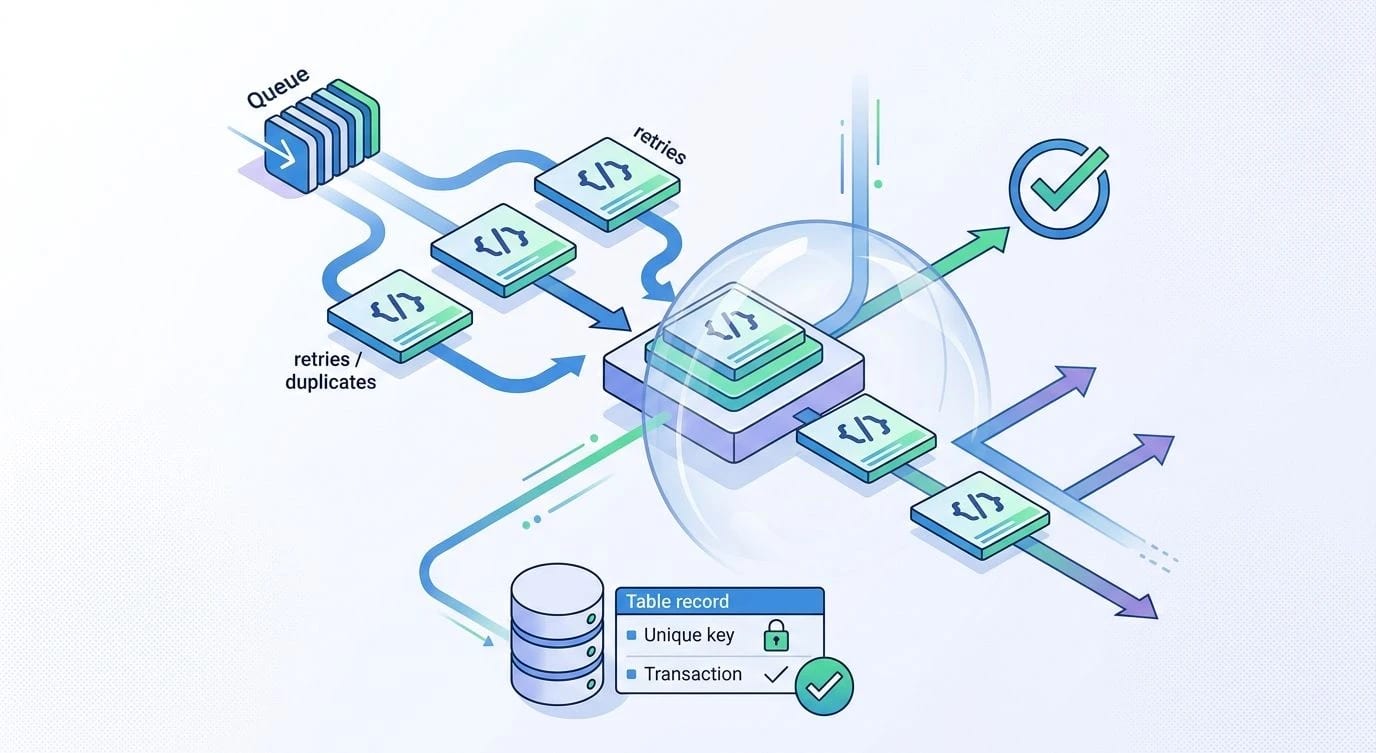
Construcción de sistemas robustos de entrega de webhooks
Diseña una entrega de webhooks con reintentos y backoff exponencial, verificación de firmas, idempotencia, registro de entregas y salud de endpoints.
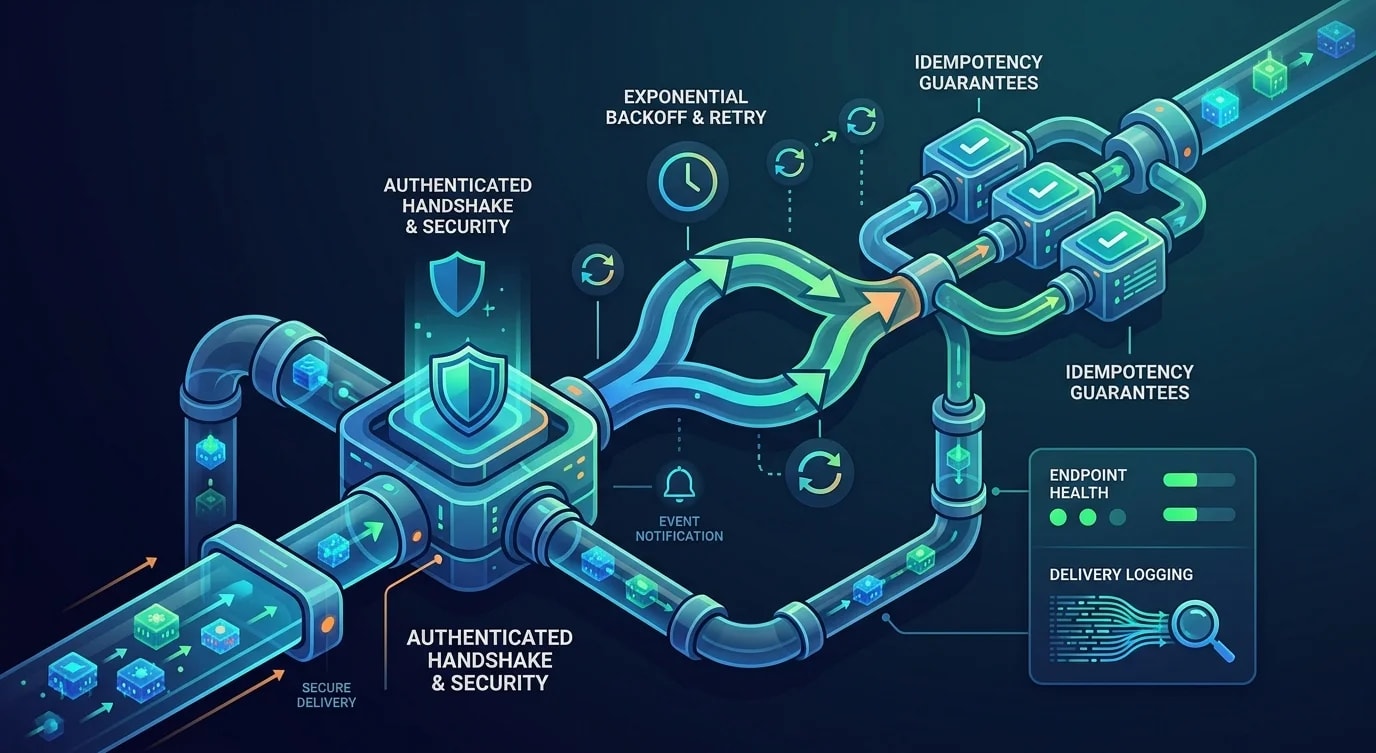
Los webhooks parecen simples: enviar un HTTP POST cuando algo sucede. En la práctica, la entrega confiable de webhooks es un problema de sistemas distribuidos. Los endpoints se caen. Las redes se particionan. Los receptores procesan con lentitud. Tu sistema debe manejar todo esto garantizando que los eventos lleguen a su destino sin pérdidas ni duplicación excesiva.
La diferencia entre un sistema de webhooks de juguete y uno de producción es la lógica de reintentos, la verificación de firmas, la idempotencia y la gestión de la salud de los endpoints.
Encolado de eventos de webhooks
Los eventos deben encolarse de inmediato y entregarse de forma asíncrona. La operación que dispara el webhook no debería bloquearse esperando la entrega.
// ❌ Synchronous webhook delivery — blocks the operation
async function createOrder(order: Order): Promise<void> {
  await database.insert(order);
  // If this fails or times out, the order creation hangs
  await fetch(webhookUrl, {
    method: "POST",
    body: JSON.stringify({ event: "order.created", data: order }),
  });
}// ✅ Queue-based async delivery
interface WebhookEvent {
id: string;
type: string;
payload: Record<string, unknown>;
createdAt: Date;
subscriptionId: string;
endpoint: string;
attempts: number;
maxAttempts: number;
nextAttemptAt: Date;
status: "pending" | "delivered" | "failed" | "exhausted";
}
class WebhookQueue {
private events: WebhookEvent[] = [];
enqueue(
type: string,
payload: Record<string, unknown>,
subscriptions: WebhookSubscription[]
): string[] {
const eventIds: string[] = [];
for (const sub of subscriptions) {
if (!sub.events.includes(type)) continue;
const event: WebhookEvent = {
id: crypto.randomUUID(),
type,
payload,
createdAt: new Date(),
subscriptionId: sub.id,
endpoint: sub.url,
attempts: 0,
maxAttempts: 8,
nextAttemptAt: new Date(),
status: "pending",
};
this.events.push(event);
eventIds.push(event.id);
}
return eventIds;
}
getDeliverable(limit: number): WebhookEvent[] {
const now = new Date();
return this.events
.filter(
(e) =>
e.status === "pending" &&
e.nextAttemptAt <= now
)
.slice(0, limit);
}
}
interface WebhookSubscription {
id: string;
url: string;
events: string[];
secret: string;
active: boolean;
}
// The order creation is now non-blocking
async function createOrder(
order: Order,
webhookQueue: WebhookQueue,
subscriptions: WebhookSubscription[]
): Promise<void> {
await database.insert(order);
webhookQueue.enqueue("order.created", { order }, subscriptions);
// Returns immediately — delivery happens asynchronously
}Estrategia de reintentos con backoff exponencial
Cuando la entrega falla, reintenta con retardos crecientes. Esto evita sobrecargar un endpoint en recuperación mientras se garantiza la entrega eventual.
class WebhookDeliveryWorker {
  private queue: WebhookQueue;

  constructor(queue: WebhookQueue) {
    this.queue = queue;
  }

  async processNextBatch(batchSize: number = 10): Promise<void> {
    const events = this.queue.getDeliverable(batchSize);

    for (const event of events) {
      await this.deliver(event);
    }
  }

  private async deliver(event: WebhookEvent): Promise<void> {
    const signature = this.sign(event);

    try {
      const controller = new AbortController();
      const timeout = setTimeout(
        () => controller.abort(),
        10_000
      );

      const response = await fetch(event.endpoint, {
        method: "POST",
        headers: {
          "Content-Type": "application/json",
          "X-Webhook-ID": event.id,
          "X-Webhook-Signature": signature,
          "X-Webhook-Timestamp": event.createdAt.toISOString(),
        },
        body: JSON.stringify({
          id: event.id,
          type: event.type,
          data: event.payload,
          created_at: event.createdAt.toISOString(),
        }),
        signal: controller.signal,
      });

      clearTimeout(timeout);

      if (response.ok) {
        event.status = "delivered";
        this.logDelivery(event, "success", response.status);
      } else if (response.status >= 500) {
        this.scheduleRetry(event);
      } else if (response.status >= 400) {
        // Client error — don't retry
        event.status = "failed";
        this.logDelivery(event, "client_error", response.status);
      }
    } catch (error) {
      this.scheduleRetry(event);
    }
  }

  private scheduleRetry(event: WebhookEvent): void {
    event.attempts++;

    if (event.attempts >= event.maxAttempts) {
      event.status = "exhausted";
      this.logDelivery(event, "exhausted", 0);
      return;
    }

    // Exponential backoff: 1m, 2m, 4m, 8m, 16m, 32m, 64m, 128m
    const delayMs = Math.min(
      60_000 * Math.pow(2, event.attempts),
      128 * 60_000
    );

    // Add jitter to prevent thundering herd
    const jitter = Math.random() * delayMs * 0.1;

    event.nextAttemptAt = new Date(
      Date.now() + delayMs + jitter
    );
    event.status = "pending";
  }

  private sign(event: WebhookEvent): string {
    // HMAC-SHA256 signature for verification
    const payload = JSON.stringify({
      id: event.id,
      type: event.type,
      data: event.payload,
      created_at: event.createdAt.toISOString(),
    });

    return `sha256=${computeHmac(payload, event.subscriptionId)}`;
  }

  private logDelivery(
    event: WebhookEvent,
    result: string,
    statusCode: number
  ): void {
    console.log(
      JSON.stringify({
        eventId: event.id,
        type: event.type,
        endpoint: event.endpoint,
        attempt: event.attempts,
        result,
        statusCode,
        timestamp: new Date().toISOString(),
      })
    );
  }
}

function computeHmac(payload: string, secret: string): string {
  // Placeholder for HMAC-SHA256
  return `hmac_${payload.length}_${secret.slice(0, 4)}`;
}
Verificación de firmas del lado del receptor
Los receptores deben verificar que los webhooks realmente provienen de tu sistema y que no fueron manipulados en tránsito.
import { createHmac, timingSafeEqual } from "crypto";

function verifyWebhookSignature(
  payload: string,
  signature: string,
  secret: string,
  toleranceSeconds: number = 300
): { valid: boolean; reason?: string } {
  // Check timestamp to prevent replay attacks
  const timestampHeader = extractTimestamp(signature);
  if (timestampHeader) {
    const eventTime = new Date(timestampHeader).getTime();
    const now = Date.now();
    const age = Math.abs(now - eventTime);

    if (age > toleranceSeconds * 1000) {
      return {
        valid: false,
        reason: `Event too old: ${Math.round(age / 1000)}s`,
      };
    }
  }

  // Compute expected signature
  const expectedSignature = createHmac("sha256", secret)
    .update(payload)
    .digest("hex");

  const expected = `sha256=${expectedSignature}`;

  // Timing-safe comparison prevents timing attacks
  const signatureBuffer = Buffer.from(signature);
  const expectedBuffer = Buffer.from(expected);

  if (signatureBuffer.length !== expectedBuffer.length) {
    return { valid: false, reason: "Signature length mismatch" };
  }

  const isValid = timingSafeEqual(signatureBuffer, expectedBuffer);

  return {
    valid: isValid,
    reason: isValid ? undefined : "Signature mismatch",
  };
}

function extractTimestamp(headers: string): string | null {
  // Extract from X-Webhook-Timestamp header
  return null; // Simplified
}

// Express middleware for webhook verification
function webhookVerificationMiddleware(secret: string) {
  return (req: Request, res: Response, next: NextFunction) => {
    const signature = req.headers["x-webhook-signature"] as string;

    if (!signature) {
      return res.status(401).json({ error: "Missing signature" });
    }

    const result = verifyWebhookSignature(
      JSON.stringify(req.body),
      signature,
      secret
    );

    if (!result.valid) {
      return res.status(403).json({
        error: "Invalid signature",
        reason: result.reason,
      });
    }

    next();
  };
}
Monitoreo de la salud de los endpoints
Rastrea la salud de los endpoints para evitar desperdiciar recursos entregando a endpoints que fallan de forma constante.
interface EndpointHealth {
  url: string;
  consecutiveFailures: number;
  lastSuccessAt: Date | null;
  lastFailureAt: Date | null;
  totalDeliveries: number;
  totalFailures: number;
  status: "healthy" | "degraded" | "disabled";
}

class EndpointMonitor {
  private health: Map<string, EndpointHealth> = new Map();

  recordSuccess(url: string): void {
    const h = this.getHealth(url);
    h.consecutiveFailures = 0;
    h.lastSuccessAt = new Date();
    h.totalDeliveries++;
    h.status = "healthy";
  }

  recordFailure(url: string): void {
    const h = this.getHealth(url);
    h.consecutiveFailures++;
    h.lastFailureAt = new Date();
    h.totalDeliveries++;
    h.totalFailures++;

    if (h.consecutiveFailures >= 10) {
      h.status = "disabled";
    } else if (h.consecutiveFailures >= 3) {
      h.status = "degraded";
    }
  }

  shouldDeliver(url: string): boolean {
    const h = this.health.get(url);
    if (!h) return true;

    if (h.status === "disabled") {
      // Check if enough time has passed to retry
      const cooldownMs = 30 * 60 * 1000; // 30 minutes
      if (
        h.lastFailureAt &&
        Date.now() - h.lastFailureAt.getTime() > cooldownMs
      ) {
        // Allow one probe delivery
        return true;
      }
      return false;
    }

    return true;
  }

  getHealthReport(): EndpointHealth[] {
    return [...this.health.values()];
  }

  private getHealth(url: string): EndpointHealth {
    let h = this.health.get(url);
    if (!h) {
      h = {
        url,
        consecutiveFailures: 0,
        lastSuccessAt: null,
        lastFailureAt: null,
        totalDeliveries: 0,
        totalFailures: 0,
        status: "healthy",
      };
      this.health.set(url, h);
    }
    return h;
  }
}
Conclusiones clave
La entrega de webhooks es un problema asíncrono de sistemas distribuidos: encola los eventos de inmediato y entrégalos fuera de la ruta de la petición para que la operación que los dispara nunca se bloquee por la disponibilidad del endpoint. Reintenta con backoff exponencial y jitter para manejar fallos transitorios sin sobrecargar endpoints en recuperación, con un tope razonable de retardo máximo y número de intentos. Firma cada payload de webhook con HMAC-SHA256 para que los receptores puedan verificar su autenticidad, e incluye marcas de tiempo para prevenir ataques de repetición. Los receptores deben verificar las firmas usando comparación de tiempo constante para prevenir ataques de canal lateral por temporización. Monitorea la salud de los endpoints con seguimiento de fallos consecutivos, deshabilitando automáticamente la entrega a endpoints que fallan de forma persistente y sondeando periódicamente su recuperación. Registra cada intento de entrega con el ID del evento, el número de intento y el resultado para proporcionar un rastro de auditoría completo para depurar problemas de entrega. El objetivo es un sistema donde los eventos nunca se pierden, los endpoints nunca se sobrecargan, y tanto el emisor como el receptor pueden verificar la integridad de cada entrega.