Arquitectura de Event Mesh para Sistemas Multi-Nube
Diseña arquitecturas de event mesh que enrutan eventos entre nubes y regiones con routing dinámico, puenteo de protocolos y gobernanza de esquemas.
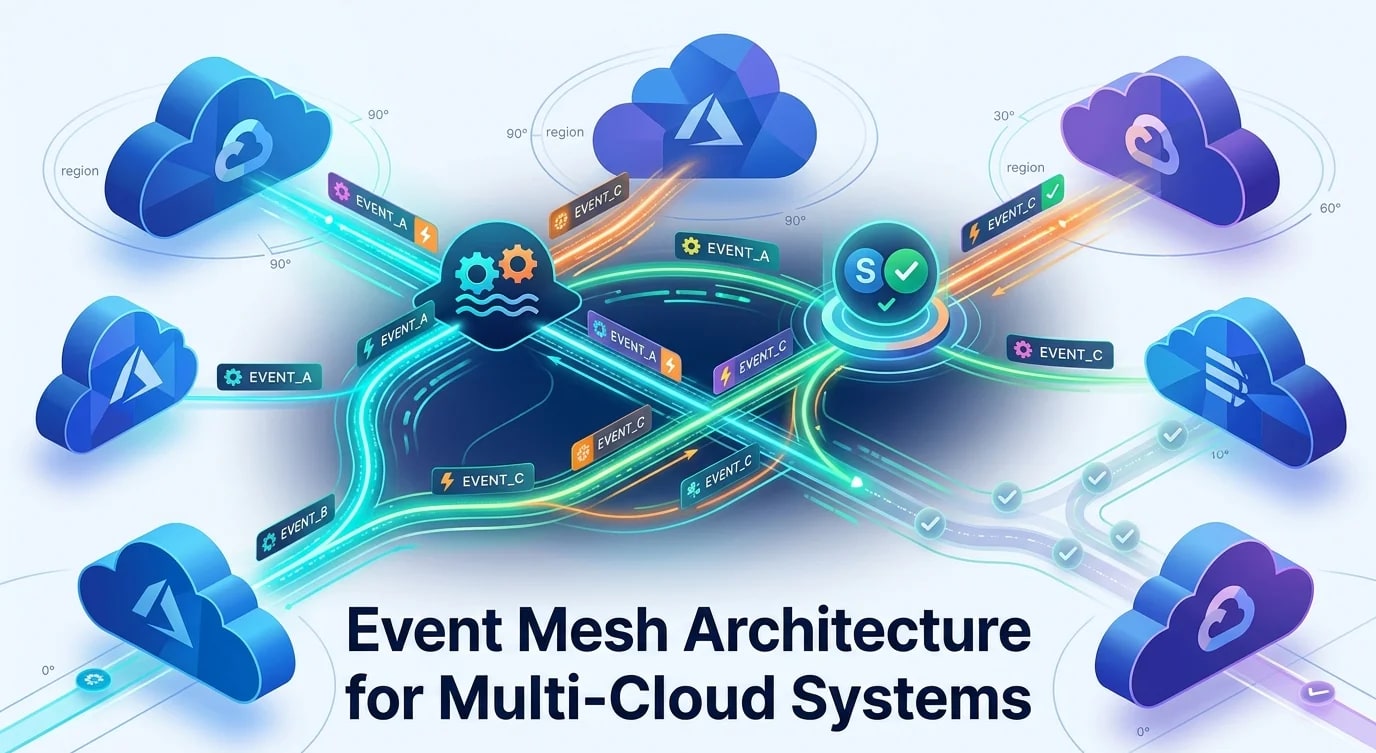
Un broker de eventos funciona bien cuando todo se ejecuta en un cluster. Pero los sistemas modernos abarcan múltiples nubes, regiones y centros de datos on-premise. Un event mesh extiende el patrón event-driven más allá de esos límites, creando una malla donde cualquier productor puede llegar a cualquier consumidor sin importar dónde se ejecuten. A diferencia de un broker centralizado, el mesh es distribuido: cada nodo maneja el tráfico local y enruta los eventos transfronterizos de forma dinámica.
Los desafíos van más allá de la red. Necesitas esquemas consistentes entre entornos, traducción de protocolos entre distintos sistemas de mensajería y garantías de entrega que sobrevivan a caídas regionales.
Topología de Malla y Enrutamiento Dinámico
Un event mesh conecta brokers entre regiones con enrutamiento inteligente. Los eventos fluyen hacia los consumidores según las suscripciones a topics, no destinos hardcodeados.
// ❌ Point-to-point integration — doesn't scale
const routes = {
  "us-east": "kafka://us-east-broker:9092",
  "eu-west": "kafka://eu-west-broker:9092",
  "ap-south": "rabbitmq://ap-south-broker:5672",
};
// Adding a new region means updating every producer
// Different protocols? Manual translation at each hop// ✅ Event mesh with dynamic routing
interface MeshNode {
id: string;
region: string;
cloud: string;
protocol: "kafka" | "amqp" | "mqtt" | "nats";
topics: Set<string>;
connectedPeers: Set<string>;
}
interface RouteEntry {
topic: string;
targetNodes: string[];
priority: number;
ttl: number;
}
class EventMeshRouter {
private nodes: Map<string, MeshNode> = new Map();
private routingTable: Map<string, RouteEntry[]> = new Map();
registerNode(node: MeshNode): void {
this.nodes.set(node.id, node);
this.rebuildRoutes();
}
subscribe(nodeId: string, topic: string): void {
const node = this.nodes.get(nodeId);
if (!node) return;
node.topics.add(topic);
this.updateRoutesForTopic(topic);
}
route(
topic: string,
sourceNode: string
): MeshNode[] {
const routes = this.routingTable.get(topic) ?? [];
return routes
.flatMap((route) =>
route.targetNodes
.filter((id) => id !== sourceNode)
.map((id) => this.nodes.get(id))
.filter((n): n is MeshNode => n !== undefined)
);
}
private rebuildRoutes(): void {
this.routingTable.clear();
for (const [nodeId, node] of this.nodes) {
for (const topic of node.topics) {
this.updateRoutesForTopic(topic);
}
}
}
private updateRoutesForTopic(topic: string): void {
const subscribedNodes: string[] = [];
for (const [nodeId, node] of this.nodes) {
if (node.topics.has(topic)) {
subscribedNodes.push(nodeId);
}
}
this.routingTable.set(topic, [
{
topic,
targetNodes: subscribedNodes,
priority: 1,
ttl: 300,
},
]);
}
}Cuando una nueva región entra en línea, su broker se registra en el mesh, se suscribe a topics e inmediatamente empieza a recibir eventos. No hace falta modificar los productores.
Puenteo de Protocolos
Distintos entornos usan distintos protocolos de mensajería. El mesh debe traducir entre ellos de forma transparente.
interface MeshEvent {
  id: string;
  topic: string;
  payload: Uint8Array;
  contentType: string;
  headers: Map<string, string>;
  timestamp: number;
  sourceNode: string;
  schemaVersion: string;
}

interface ProtocolBridge {
  protocol: string;
  serialize(event: MeshEvent): Uint8Array;
  deserialize(data: Uint8Array, metadata: Record<string, string>): MeshEvent;
}

class KafkaBridge implements ProtocolBridge {
  protocol = "kafka";

  serialize(event: MeshEvent): Uint8Array {
    const record = {
      key: event.id,
      value: event.payload,
      headers: Object.fromEntries(event.headers),
      timestamp: event.timestamp,
    };
    return new TextEncoder().encode(JSON.stringify(record));
  }

  deserialize(
    data: Uint8Array,
    metadata: Record<string, string>
  ): MeshEvent {
    const record = JSON.parse(new TextDecoder().decode(data));
    return {
      id: record.key,
      topic: metadata.topic ?? "",
      payload: new TextEncoder().encode(
        typeof record.value === "string"
          ? record.value
          : JSON.stringify(record.value)
      ),
      contentType: "application/json",
      headers: new Map(Object.entries(record.headers ?? {})),
      timestamp: record.timestamp ?? Date.now(),
      sourceNode: metadata.sourceNode ?? "",
      schemaVersion: record.headers?.["schema-version"] ?? "1.0",
    };
  }
}

class AmqpBridge implements ProtocolBridge {
  protocol = "amqp";

  serialize(event: MeshEvent): Uint8Array {
    const message = {
      messageId: event.id,
      body: event.payload,
      applicationProperties: Object.fromEntries(event.headers),
      creationTime: event.timestamp,
    };
    return new TextEncoder().encode(JSON.stringify(message));
  }

  deserialize(
    data: Uint8Array,
    metadata: Record<string, string>
  ): MeshEvent {
    const message = JSON.parse(new TextDecoder().decode(data));
    return {
      id: message.messageId,
      topic: metadata.topic ?? "",
      payload: message.body,
      contentType: "application/json",
      headers: new Map(
        Object.entries(message.applicationProperties ?? {})
      ),
      timestamp: message.creationTime ?? Date.now(),
      sourceNode: metadata.sourceNode ?? "",
      schemaVersion:
        message.applicationProperties?.["schema-version"] ?? "1.0",
    };
  }
}

class BridgeManager {
  private bridges: Map<string, ProtocolBridge> = new Map();

  register(bridge: ProtocolBridge): void {
    this.bridges.set(bridge.protocol, bridge);
  }

  translate(
    event: MeshEvent,
    sourceProtocol: string,
    targetProtocol: string
  ): Uint8Array {
    const targetBridge = this.bridges.get(targetProtocol);
    if (!targetBridge) {
      throw new Error(
        `No bridge for protocol: ${targetProtocol}`
      );
    }
    return targetBridge.serialize(event);
  }
}
Gobernanza de Esquemas en el Mesh
Los eventos que fluyen entre servicios desplegados de forma independiente necesitan contratos de esquema. Sin gobernanza, productores y consumidores divergen en silencio.
interface SchemaDefinition {
  id: string;
  topic: string;
  version: number;
  schema: object;
  compatibility: "backward" | "forward" | "full" | "none";
  registeredAt: Date;
}

class MeshSchemaRegistry {
  private schemas: Map<string, SchemaDefinition[]> = new Map();

  register(schema: SchemaDefinition): {
    accepted: boolean;
    reason?: string;
  } {
    const existing = this.schemas.get(schema.topic) ?? [];
    const latest = existing[existing.length - 1];

    if (latest) {
      const compatible = this.checkCompatibility(
        latest,
        schema
      );
      if (!compatible.ok) {
        return {
          accepted: false,
          reason: compatible.reason,
        };
      }
    }

    existing.push(schema);
    this.schemas.set(schema.topic, existing);
    return { accepted: true };
  }

  getLatest(topic: string): SchemaDefinition | null {
    const versions = this.schemas.get(topic);
    return versions?.[versions.length - 1] ?? null;
  }

  private checkCompatibility(
    existing: SchemaDefinition,
    proposed: SchemaDefinition
  ): { ok: boolean; reason?: string } {
    switch (existing.compatibility) {
      case "backward":
        // New schema can read old data
        return this.isBackwardCompatible(existing, proposed);
      case "forward":
        // Old schema can read new data
        return this.isForwardCompatible(existing, proposed);
      case "full":
        // Both directions
        const backward = this.isBackwardCompatible(
          existing, proposed
        );
        const forward = this.isForwardCompatible(
          existing, proposed
        );
        return {
          ok: backward.ok && forward.ok,
          reason: backward.reason ?? forward.reason,
        };
      case "none":
        return { ok: true };
    }
  }

  private isBackwardCompatible(
    existing: SchemaDefinition,
    proposed: SchemaDefinition
  ): { ok: boolean; reason?: string } {
    // Simplified: check no required fields were removed
    const existingFields = this.extractRequiredFields(
      existing.schema
    );
    const proposedFields = this.extractRequiredFields(
      proposed.schema
    );

    for (const field of existingFields) {
      if (!proposedFields.has(field)) {
        return {
          ok: false,
          reason: `Required field "${field}" removed`,
        };
      }
    }
    return { ok: true };
  }

  private isForwardCompatible(
    existing: SchemaDefinition,
    proposed: SchemaDefinition
  ): { ok: boolean; reason?: string } {
    // New fields must have defaults
    const existingFields = this.extractAllFields(existing.schema);
    const proposedFields = this.extractAllFields(proposed.schema);
    const newFields = [...proposedFields].filter(
      (f) => !existingFields.has(f)
    );

    const requiredNew = this.extractRequiredFields(
      proposed.schema
    );
    for (const field of newFields) {
      if (requiredNew.has(field)) {
        return {
          ok: false,
          reason: `New required field "${field}" without default`,
        };
      }
    }
    return { ok: true };
  }

  private extractRequiredFields(schema: object): Set<string> {
    const s = schema as any;
    return new Set(s.required ?? []);
  }

  private extractAllFields(schema: object): Set<string> {
    const s = schema as any;
    return new Set(Object.keys(s.properties ?? {}));
  }
}
Garantías de Entrega entre Regiones
Los eventos que cruzan límites regionales enfrentan particiones de red, picos de latencia y desafíos de ordenamiento. El mesh debe proporcionar semánticas de entrega predecibles.
interface DeliveryConfig {
  guaranty: "at-most-once" | "at-least-once" | "exactly-once";
  maxRetries: number;
  retryBackoff: number;
  deduplicationWindow: number;
  orderingKey?: string;
}

class CrossRegionDelivery {
  private delivered: Map<string, number> = new Map();

  async deliver(
    event: MeshEvent,
    targets: MeshNode[],
    config: DeliveryConfig
  ): Promise<DeliveryReport> {
    const results: DeliveryResult[] = [];

    for (const target of targets) {
      const result = await this.deliverToNode(
        event,
        target,
        config
      );
      results.push(result);
    }

    return {
      eventId: event.id,
      totalTargets: targets.length,
      delivered: results.filter((r) => r.success).length,
      failed: results.filter((r) => !r.success),
    };
  }

  private async deliverToNode(
    event: MeshEvent,
    target: MeshNode,
    config: DeliveryConfig
  ): Promise<DeliveryResult> {
    // Deduplication check
    if (config.guaranty !== "at-most-once") {
      const deliveryKey = `${event.id}:${target.id}`;
      const lastDelivery = this.delivered.get(deliveryKey);

      if (
        lastDelivery &&
        Date.now() - lastDelivery < config.deduplicationWindow
      ) {
        return {
          targetNode: target.id,
          success: true,
          deduplicated: true,
        };
      }
    }

    // Retry with backoff
    for (let attempt = 0; attempt <= config.maxRetries; attempt++) {
      try {
        await this.send(event, target);

        const deliveryKey = `${event.id}:${target.id}`;
        this.delivered.set(deliveryKey, Date.now());

        return {
          targetNode: target.id,
          success: true,
          attempts: attempt + 1,
        };
      } catch (error) {
        if (attempt < config.maxRetries) {
          const delay =
            config.retryBackoff * Math.pow(2, attempt);
          await new Promise((r) => setTimeout(r, delay));
        }
      }
    }

    return {
      targetNode: target.id,
      success: false,
      attempts: config.maxRetries + 1,
      error: "Max retries exceeded",
    };
  }

  private async send(
    event: MeshEvent,
    target: MeshNode
  ): Promise<void> {
    // Protocol-specific send logic
    console.log(
      `Delivering ${event.id} to ${target.id} via ${target.protocol}`
    );
  }
}

interface DeliveryResult {
  targetNode: string;
  success: boolean;
  attempts?: number;
  deduplicated?: boolean;
  error?: string;
}

interface DeliveryReport {
  eventId: string;
  totalTargets: number;
  delivered: number;
  failed: DeliveryResult[];
}
Puntos Clave
Un event mesh extiende la arquitectura event-driven más allá de los límites de nube, región y protocolo al conectar brokers distribuidos con enrutamiento dinámico. El enrutamiento dinámico basado en topics significa que nuevas regiones o servicios se unen al mesh registrándose y suscribiéndose — no se requieren cambios en los productores. Los puentes de protocolo traducen eventos entre Kafka, AMQP, MQTT y otros protocolos de forma transparente, permitiendo que entornos heterogéneos participen en la misma malla de eventos. La gobernanza de esquemas en el mesh previene la divergencia silenciosa de contratos: registra esquemas con verificaciones de compatibilidad que rechacen cambios breaking antes de que lleguen a los consumidores. La entrega entre regiones requiere garantías explícitas: elige entre at-most-once, at-least-once o exactly-once según los requisitos de negocio, e implementa ventanas de deduplicación para manejar los duplicados inevitables de la lógica de reintentos. El event mesh no es un producto único: es un patrón arquitectónico que compone routers, puentes, registros y garantías de entrega en una malla unificada para el flujo distribuido de eventos.


